

What Is Pencil Lead Made Of? A Complete Guide for Students, Artists, and Professionals
Pencils are one of the most common and essential stationery items used by students, artists, and professionals around the world. While they may seem simple, the material inside the pencil—often referred to as “lead”—has a fascinating history and unique composition. In this article, we will explore what pencil lead is actually made of, how it differs from real lead, and why choosing high-quality pencils from reliable suppliers like Shiny You Stationery ensures better performance for writing and drawing.
The Misconception About Pencil Lead
Contrary to popular belief, pencils have never contained real lead. The term “lead” is a historical misnomer that originated centuries ago when graphite was first discovered. Early users mistook graphite for a form of lead ore because of its similar appearance. Over time, the word “pencil lead” remained, even though modern pencils are completely free of actual lead and safe to use.
So, What Is Pencil Lead Made Of?
Pencil lead is made from a combination of graphite and clay, not metal. Graphite is a naturally occurring form of carbon that is soft, black, and slippery, making it ideal for leaving marks on paper. The clay acts as a binding agent that gives the pencil lead structure and determines how hard or soft the writing core will be. The mixture is finely ground, blended with water, and then fired in a kiln to create strong, smooth pencil leads.
The Composition of Pencil Lead
- Graphite – Provides the dark color and smooth texture of the pencil mark.
- Clay – Controls hardness: more clay results in a harder lead, while less clay produces a softer, darker lead.
- Wax or Other Additives – Sometimes added to improve smoothness and reduce smudging.
The Pencil Hardness Scale
Pencil leads are classified using the “HB scale,” which indicates the balance of hardness (H) and blackness (B). For example, an “H” pencil contains more clay and is harder, leaving lighter marks, while a “B” pencil contains more graphite and produces darker, softer lines. The most common writing pencil is HB, which provides a balance between hardness and darkness. Artists often use softer grades like 2B, 4B, or 6B for shading and sketching, while engineers may prefer harder grades like 2H or 4H for precise technical drawings.
How Pencil Lead Is Manufactured
The manufacturing process of pencil lead combines both science and craftsmanship. Here are the main steps:
- Mixing – Graphite powder and clay are blended together in specific ratios, depending on the desired hardness.
- Shaping – The mixture is extruded through a machine to form thin rods.
- Drying – These rods are carefully dried to remove moisture.
- Firing – The dried leads are baked in a kiln at high temperatures to strengthen them.
- Finishing – Some leads are coated with wax to make writing smoother and reduce breakage.
Applications of Different Pencil Leads
Different types of pencil leads are suited for different uses:
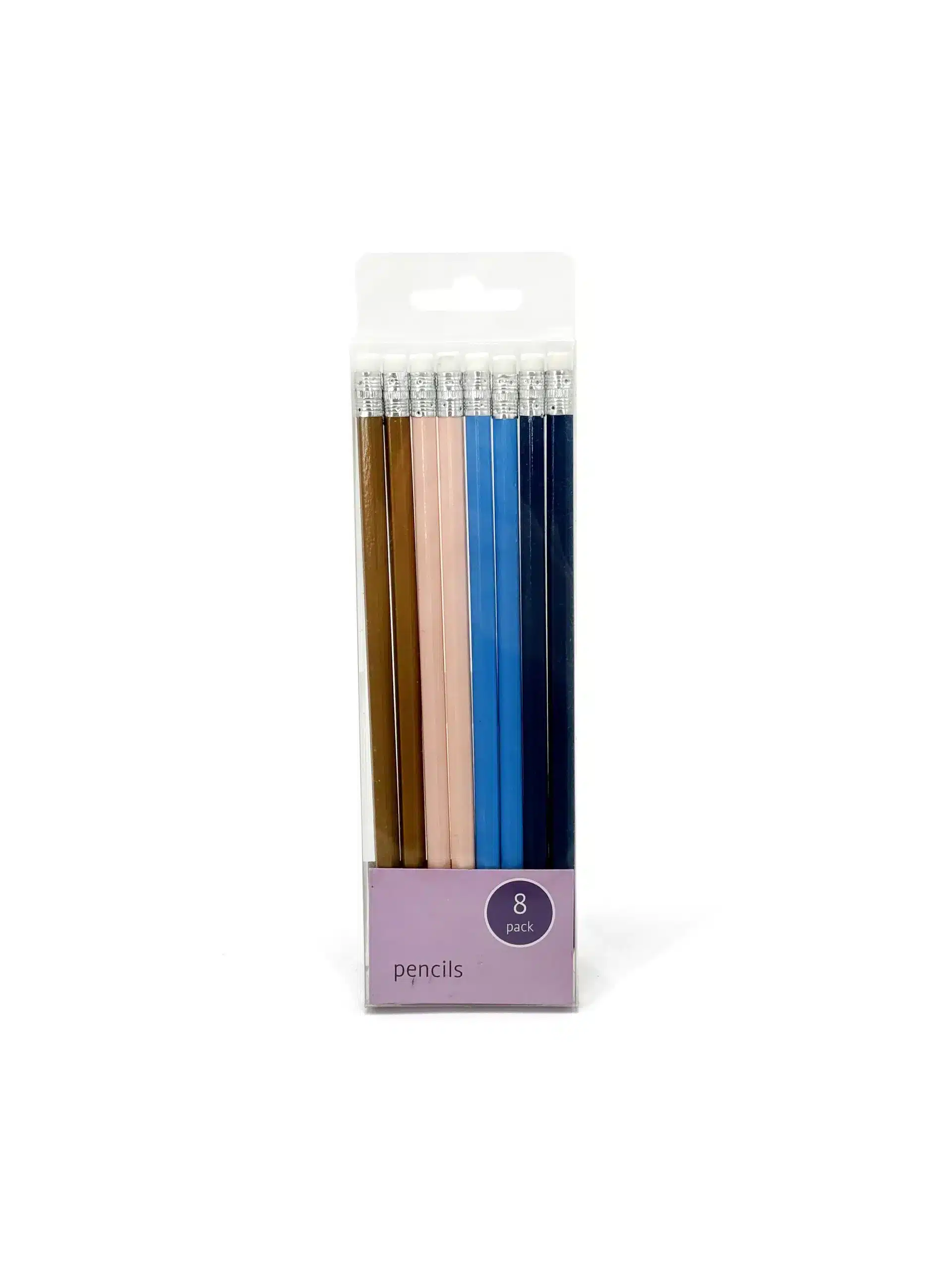
- School and Office Use – HB pencils are the standard choice for everyday writing. For example, Colorful Day-Themed Pencils with Erasers are practical and fun for daily schoolwork and note-taking.
- Art and Sketching – Softer pencils (2B–8B) allow for shading, blending, and expressive drawing. Sets like the Elegant Colored Pencils in Earthy Tones and Blues provide excellent options for artists who want depth and smooth blending.
- Technical Drawing – Harder pencils (H–6H) are preferred by architects and engineers for precise, light lines. You can explore more varieties in the Pencil Collection from Shiny You Stationery.
Why High-Quality Pencil Lead Matters
The quality of pencil lead can significantly affect writing and drawing performance. Low-quality leads may break easily, feel scratchy, or produce inconsistent marks. High-quality leads, on the other hand, provide smooth application, consistent darkness, and durability. For students, this means easier note-taking; for artists, it means richer shading and cleaner lines.
Shiny You Stationery: Reliable Pencil Supplier from China
As a leading stationery wholesaler, Shiny You Stationery offers a wide range of high-quality pencils designed for both everyday writing and professional artistry. Their products use carefully balanced graphite and clay mixtures, ensuring durability, smoothness, and excellent performance. Schools, retailers, and art studios around the world trust Shiny You Stationery for affordable yet reliable stationery supplies. Whether you need school pencils with erasers or artist-grade colored pencils, you can find dependable options in their complete pencil collection.
Final Thoughts
So, what is pencil lead made of? The answer is a simple yet fascinating mixture of graphite and clay, perfected through centuries of craftsmanship. While the term “lead” is historically misleading, pencils remain one of the safest, most practical, and most widely used writing instruments in the world. Understanding the materials behind pencil lead helps us appreciate their versatility, from schoolwork to fine art. For anyone seeking quality pencils at wholesale prices, Shiny You Stationery is a trusted supplier that ensures both performance and value.