

Custom Stationery Set for Retailers: 7 MOQ & Branding Tips
Custom Stationery Set for Retailers: 7 MOQ & Branding Tips
A custom stationery set is one of the fastest ways for a retail chain to stand out on a shelf full of generic notebooks and pens. But before placing an order, buyers usually have three questions: how many units do they need to commit to, how long will production take, and how much can actually be branded?
This guide walks through all three, using real sourcing benchmarks from stationery manufacturing, so you can plan your next order with confidence.
Table of Contents
- What Is a Custom Stationery Set
- Why Retail Chains Choose a Custom Stationery Set
- MOQ for a Custom Stationery Set
- Lead Times for a Custom Stationery Set
- Branding Options for a Custom Stationery Set
- Materials and Sustainability Choices
- Pricing Factors to Understand Before You Quote
- Sourcing a Custom Stationery Set from China
- Common Mistakes Retail Buyers Make
- Choosing a Manufacturer
- Planning Your Launch Timeline
- FAQ
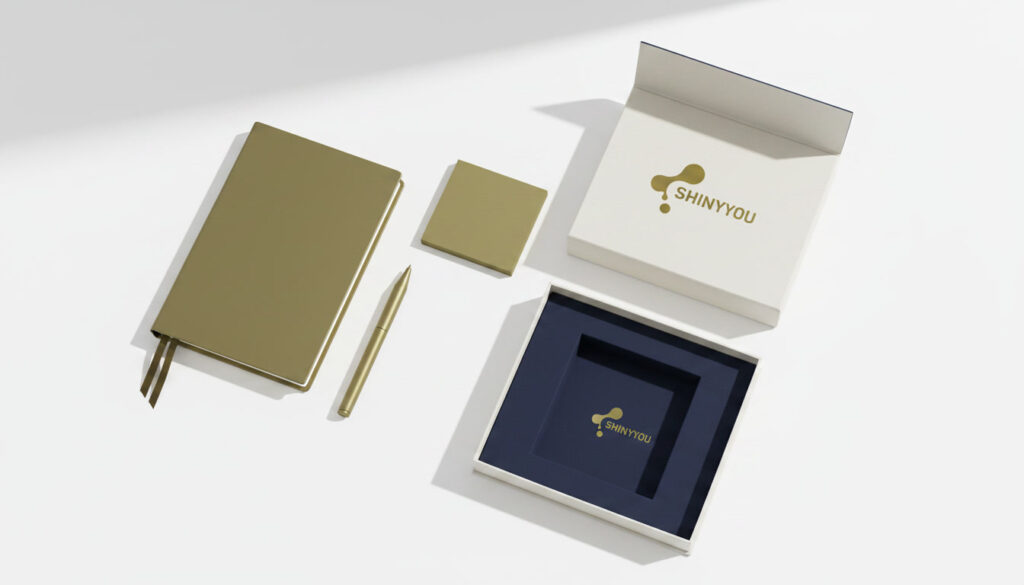
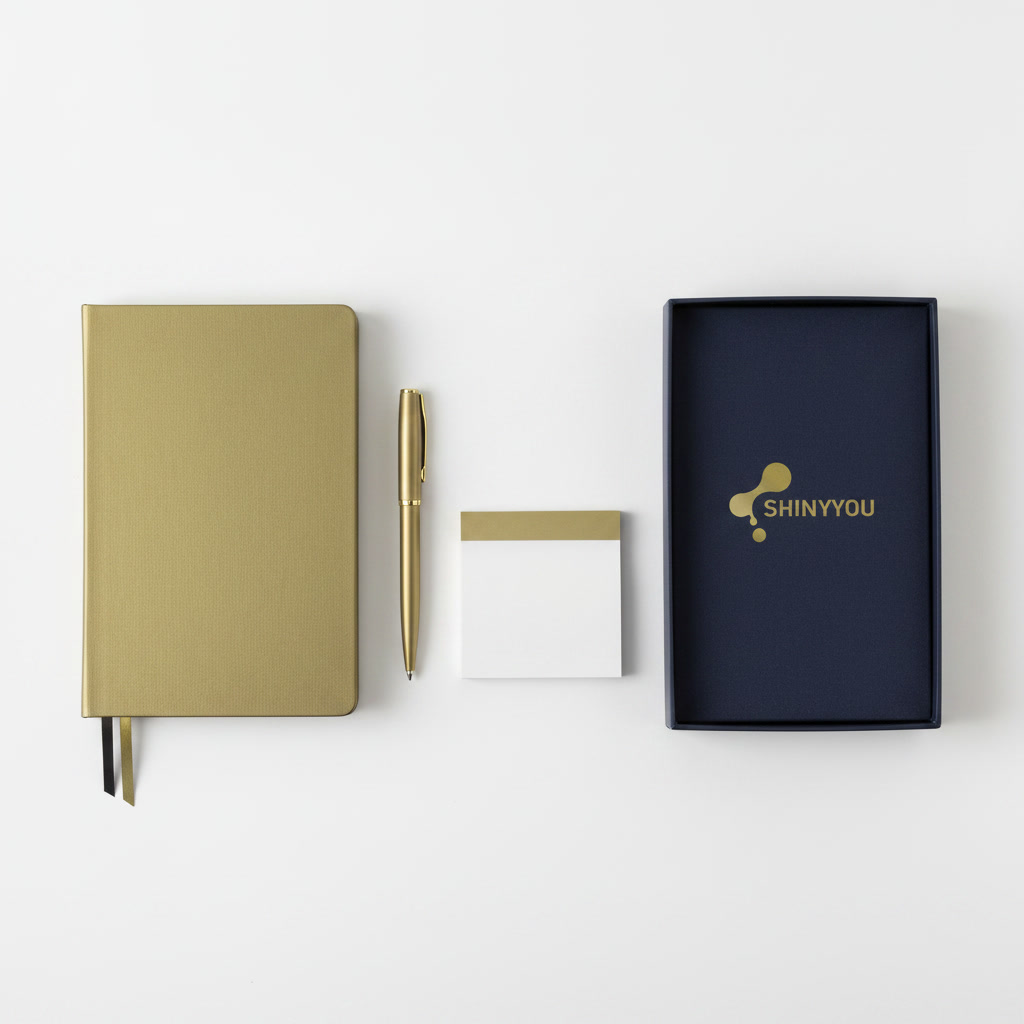
A custom stationery set built for retail — notebook, pen, and packaging designed as one branded unit.
What Is a Custom Stationery Set
A custom stationery set typically bundles a notebook, pen, and small accessories such as sticky notes or a bookmark into one packaged unit. Unlike stock items, every part of the bundle can be adjusted: cover material, paper weight, ink color, box design, and even the ratio of items inside.
That flexibility is the whole point. A retailer selling to students needs a different mix than one selling premium gift sets, and a fully custom build lets both start from the same base product line without settling for whatever a supplier already has sitting in a warehouse. You can browse a full stationery set category to see how many different formats a single bundle can take, from simple two-piece combos to multi-item boxed kits.
For retail chains, this matters because the set can be tailored to a season, a private label, or a specific price tier, rather than being locked into generic stock. A back-to-school set, a corporate gifting set, and a stationery gift set built around a licensed character all start from the same manufacturing process, but end up looking nothing alike once branding and packaging are applied.
Why Retail Chains Choose a Custom Stationery Set
Retail buyers increasingly favor a custom stationery set over generic bulk stock for three reasons.
Differentiation. A private-label bundle doesn’t show up on a competitor’s shelf with the same price tag attached, which matters more every year as more retailers chase the same seasonal categories. When every discount chain is selling the same unbranded notebook-and-pen combo, a distinct box design or color story is often the only thing separating one retailer’s version from another’s.
Margin control. Because the product is sourced directly against a spec, retailers avoid the markup layers that come with pre-branded wholesale goods bought through a middleman. Working straight with a manufacturer instead of a trading company usually removes at least one layer of margin from the cost structure, which either improves retailer profit or allows for a more competitive shelf price.
Consumer demand. Personalization has become one of the clearest trends in the category. The stationery sector has been expanding steadily, and buyers are increasingly drawn to individualized products rather than mass-produced items, a shift documented in recent industry market analysis. Regionally, sourcing from Asia Pacific remains dominant, since the region accounts for the largest share of global stationery production and supply according to Mordor Intelligence’s stationery market report. For a retail chain, that regional concentration usually translates into shorter supply chains and more competitive per-unit pricing when sourcing directly from manufacturers rather than trading companies.
MOQ for a Custom Stationery Set
MOQ (Minimum Order Quantity) is usually the first blocker for retail buyers testing a custom stationery set for the first time.
Typical MOQ Ranges
Most manufacturers set their minimum based on the complexity of customization:
- Logo printing only (pen or notebook cover branded with your logo): 500–1,000 units
- Custom packaging plus logo: 1,000–3,000 units
- Fully custom mold, materials, or box structure: 3,000–5,000+ units
Multi-item bundles carry higher MOQs than single products because each component (notebook, pen, box, insert) has its own production minimum, and everything has to be assembled together before it ships as one finished unit. A deeper breakdown of how these minimums are calculated is covered in this MOQ wholesale guide, which walks through why bundled products behave differently from single-item SKUs when a factory is pricing a quote.
MOQ for a custom stationery set typically scales with how many components and customizations are involved.
How to Negotiate Lower MOQs
Retail chains testing a new SKU rarely want to commit to 5,000 units upfront on an unproven line. A few approaches that work in practice:
- Order a pre-production sample run (usually 20–100 units) before committing to bulk.
- Ask suppliers whether they can combine the order with an existing production run of similar components, which lowers the minimum for packaging and mold costs.
- Negotiate a phased MOQ, where the first order is smaller and the price adjusts once volume increases in future purchase orders.
- Start with a simpler customization tier, such as logo printing on existing packaging, then move to fully custom molds once sales data justifies the investment.
Why MOQ Varies by Component
It helps to understand that a bundle’s MOQ is really the sum of several smaller MOQs stacked together. A notebook might have its own minimum of 1,000 units, a pen might sit at 2,000, and custom packaging inserts might require 3,000 to be cost-effective for the printer. When a manufacturer quotes a single MOQ for the whole bundle, they’re usually finding the number where every component becomes economical to produce at once. That’s also why swapping even one element, such as moving from a stock pen to a fully custom-molded one, can shift the entire order’s minimum significantly.
Lead Times for a Custom Stationery Set
Lead time is where most first-time retail buyers underestimate their timeline. A multi-component bundle involves more production stages than a single stock item, so scheduling matters.
Sample Development
Expect 7–15 days for an initial sample, covering material selection, printing proof, and packaging mockup. Complex sets with multiple components or custom tooling can take longer, especially if a new mold is required for a pen barrel or box insert.
Bulk Production Timeline
Once a sample is approved, bulk production generally takes 30–45 days, depending on order size and the number of customized components. Peak seasons, such as the run-up to back-to-school or holiday retail cycles, can extend this by one to two weeks, so it’s worth placing orders at least 8–10 weeks ahead of a launch date.
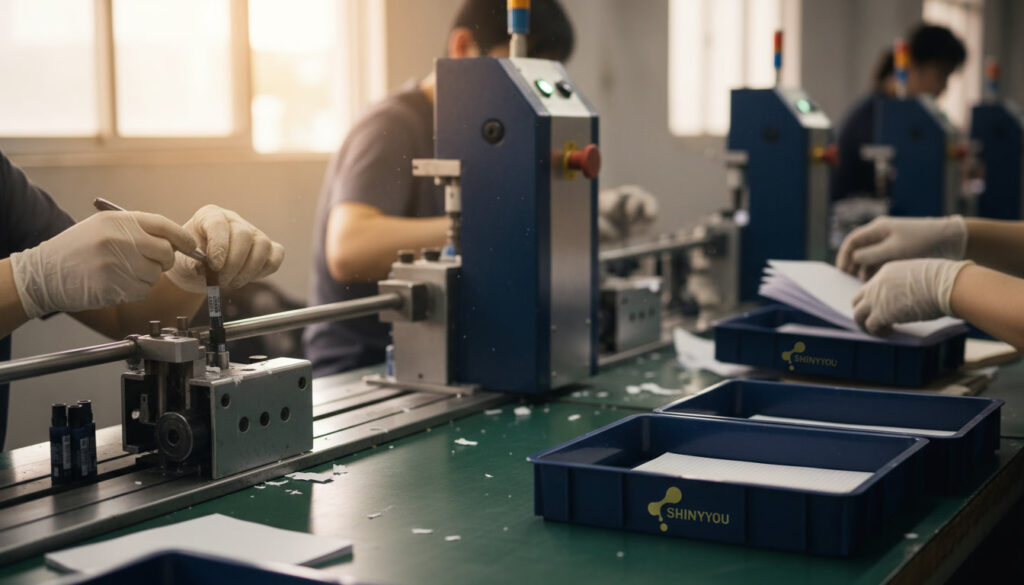
From sample approval to bulk production, a custom stationery set typically takes 6–9 weeks before shipping.
Shipping and Buffer Time
Beyond production, factor in ocean or air freight, customs clearance, and any inspection step your retail chain requires before goods reach a distribution center. Ocean freight typically adds three to six weeks depending on destination, while air freight can cut that to under a week at a higher cost. Building in a buffer of at least two weeks beyond the quoted lead time protects launch dates from minor delays at any single stage. A more detailed walkthrough of how sourcing timelines work end to end is available in this practical guide to sourcing from China.
Branding Options for a Custom Stationery Set
Branding is usually the deciding factor between a supplier that can deliver a competitive result and one that’s limited to basic logo printing.
Packaging Branding
The box or sleeve is the first branding touchpoint on a retail shelf. Options include custom die-cut boxes, printed sleeves, foil stamping, and window packaging that displays the notebook or pen inside without requiring the customer to open anything. A rigid gift box signals a premium price point, while a simple kraft slipcase suits a budget-tier or eco-positioned line. Full packaging format options are covered in this guide to custom stationery packaging, including how format choice affects both cost and shelf presence.
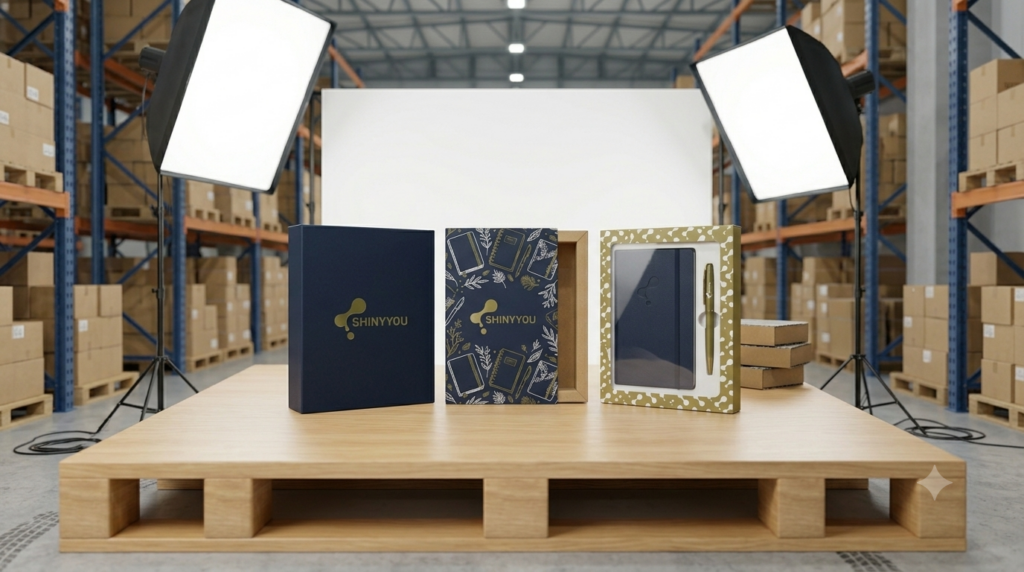
Packaging format has a big impact on how a custom stationery set is perceived on shelf, from budget kraft to premium rigid box.
Product-Level Branding
Beyond packaging, individual items can be branded with debossing, screen printing, laser engraving, or spot-color printing, depending on the material of the notebook cover or pen barrel. Higher-end retail lines often combine two techniques, such as a debossed logo on a leatherette cover paired with foil-stamped packaging, to create a more premium unboxing experience. For the writing instrument component specifically, options like stylos gel or novelty barrels can be printed with a logo, a pattern, or a seasonal design that matches the notebook.
Private Label vs OEM
Retail chains sourcing a fully branded bundle generally choose between two models:
- Private label: the retailer’s own brand appears on the product and packaging, with the manufacturer staying invisible to the end customer.
- OEM: the manufacturer builds the entire product to a retailer’s exact specification, including proprietary materials or packaging structure, often for larger accounts with unique design requirements.
Some manufacturers support both models under one roof, which is useful for retail chains that want private label for their core range and OEM development for a signature seasonal line. A gift-oriented version of the same bundle, positioned for holiday or corporate gifting, often draws from the broader stationery gifts category as a starting template before customization begins.
Materials and Sustainability Choices
Material selection affects both cost and how a bundle is positioned on shelf. A recycled kraft notebook cover paired with a plant-based ink pen signals an eco-conscious line, while a PU leather cover and metal-barrel pen signal a premium gifting line. Retailers increasingly ask about FSC-certified paper, recyclable packaging, and reduced plastic content, partly because consumers are paying closer attention to sourcing claims and partly because some retail chains now have internal sustainability targets that suppliers need to meet.
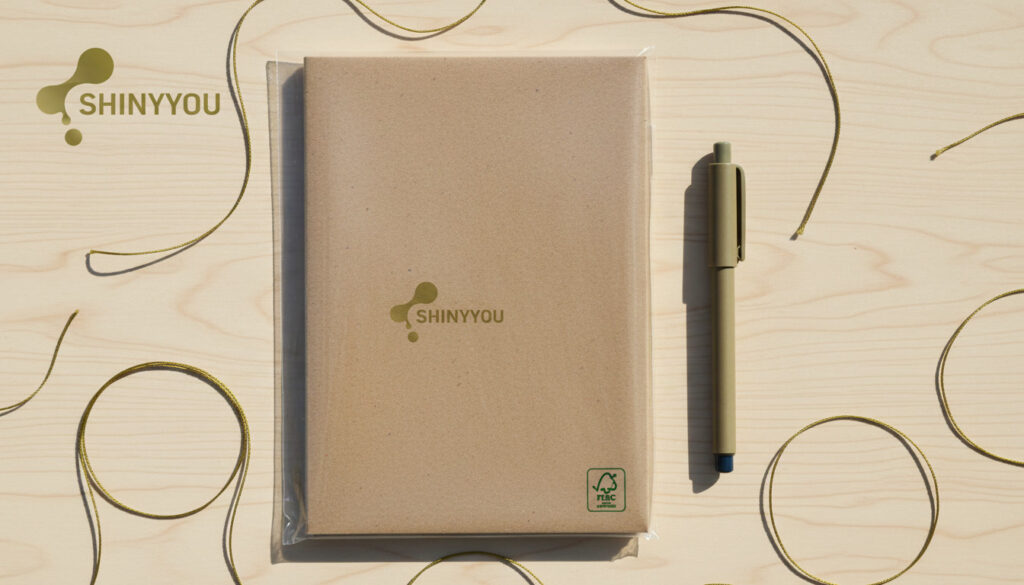
FSC-certified paper and recycled packaging are increasingly common requests for a custom stationery set.
When comparing quotes, it’s worth asking specifically which certifications a factory holds, since claims like “eco-friendly” or “sustainable” aren’t standardized and can mean very different things depending on the supplier. Certifications such as FSC for paper sourcing, BSCI for labor practices, and compostability certifications for packaging materials are the kind of documentation a serious manufacturer should be able to produce on request rather than just referencing in marketing copy.
Pricing Factors to Understand Before You Quote
Unit price on a custom stationery set is rarely a single number; it moves based on several variables working together.
- Order volume: larger volumes reduce per-unit cost as fixed setup costs (molds, printing plates, packaging dies) get spread across more units.
- Number of components: a three-piece bundle costs more per unit than a two-piece one, both in raw materials and assembly labor.
- Customization depth: logo printing on existing tooling is far cheaper than a fully custom mold or a unique box structure.
- Material grade: recycled kraft paper costs less than PU leather; a plastic barrel pen costs less than a metal one.
- Packaging complexity: a printed sleeve is cheaper than a rigid gift box with foil stamping and a magnetic closure.
Retail buyers who ask for a detailed cost breakdown, rather than just a bottom-line unit price, are usually in a better position to negotiate, since it becomes clear which specific choices are driving cost up and where there’s room to simplify without hurting the shelf presentation.
Sourcing a Custom Stationery Set from China
China remains the dominant sourcing hub for custom stationery, producing the majority of the world’s stationery output thanks to a mature supply chain that covers paper mills, plastic molding, pen assembly, and printing under one regional ecosystem. That concentration means shorter supplier-to-supplier logistics, more competitive material pricing, and a wider pool of factories with genuine multi-component bundle experience compared to sourcing regions with a thinner manufacturing base.
For retail buyers new to direct sourcing, the process typically starts with a written specification (materials, dimensions, branding requirements, target price), moves to supplier shortlisting and sample requests, then into a pre-production sample, and finally a bulk order once the sample is approved. A step-by-step breakdown of this process, along with what to expect at each stage, is available in this practical sourcing guide. It’s also worth reviewing a broader buyer’s guide to Chinese stationery manufacturers if this is a first-time sourcing project, since supplier vetting matters as much as the product spec itself.
Common Mistakes Retail Buyers Make
A few recurring issues come up often enough with first-time custom stationery set buyers that they’re worth flagging directly.
Underestimating total lead time. Buyers frequently plan around the production timeline alone and forget to add shipping, customs clearance, and a safety buffer, which pushes launch dates later than expected.
Skipping the physical sample. Renders and factory photos can hide material quality issues that only show up once a physical unit is in hand. A sample review should always happen before a bulk purchase order is confirmed.
Locking in a spec too early. Changing a single component, such as swapping from a stock pen to a custom-molded one, after tooling has already started can add weeks and cost to a project. It’s worth finalizing every component of the bundle before requesting a formal quote.
Not asking about component-level MOQ. As covered above, a bundle’s overall minimum is really several component minimums combined. Buyers who don’t ask how each piece contributes to that number sometimes get surprised by a much higher total than expected.
Choosing packaging that doesn’t match the price tier. A budget notebook set in a rigid gift box (or vice versa) creates a mismatch between what the packaging promises and what the product delivers, which can affect return rates and customer perception.
Choosing a Manufacturer
Not every stationery factory is set up to handle a multi-item custom stationery set efficiently. When evaluating suppliers, retail buyers should check for:
- Experience producing multi-component bundles, not just single SKUs
- In-house packaging design and printing, so branding doesn’t require a third-party vendor
- Compliance certifications relevant to your target market, such as CPSIA for the US or EN71 for the EU
- A track record supplying retail chains, not only single-store or gift-market clients
- Clear MOQ and lead time documentation before you request a formal quote
- Willingness to ship a physical sample rather than relying on renders or photos alone
Asking for references from other retail accounts, and requesting a factory audit report if the order size justifies it, is a reasonable step before committing to a first purchase order. This 10-question checklist covers the specific questions worth asking a supplier before signing off on a first order, and this guide to choosing a stationery manufacturer goes deeper into vetting criteria beyond price alone. If you’re ready to move forward, you can also request a quote directly to get MOQ, lead time, and pricing specific to your bundle.
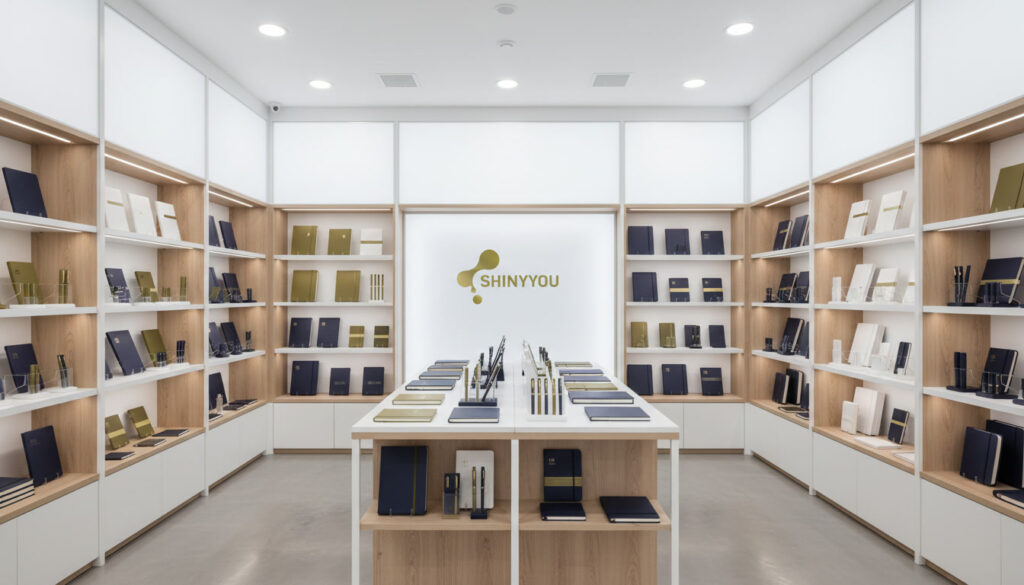
Reviewing a manufacturer’s showroom in person, or virtually, is one of the fastest ways to vet quality before committing to an MOQ.
Planning Your Launch Timeline
Once a custom stationery set has cleared sampling and moved into bulk production, retail buyers still need to plan the retail side of the launch. Photography, packaging approval for in-store signage, and any listing setup for e-commerce channels should happen in parallel with production rather than after goods arrive, since waiting until stock lands to start these tasks can delay a launch by several extra weeks. Coordinating with the manufacturer on final production photos, rather than relying only on early sample images, also helps make sure marketing materials reflect exactly what customers will receive.
For seasonal launches in particular, working backward from the on-shelf date is the safest approach: add sample development time, bulk production time, shipping time, and a buffer, then treat that total as the latest possible order date. A custom stationery set tied to a specific season, such as back-to-school or a holiday gifting window, has no flexibility on the launch date, so the sourcing timeline has to be treated as fixed even when other parts of a retail calendar can shift.
FAQ
What is the minimum order quantity for a custom stationery set?
MOQ typically ranges from 500 to 5,000 units depending on the level of customization, with simple logo printing sitting at the lower end and fully custom packaging or molds at the higher end.
How long does it take to produce a custom stationery set?
Sample development usually takes 7–15 days, followed by 30–45 days for bulk production, so most retail buyers should plan 8–10 weeks from order to delivery, plus shipping time.
Can I order a small trial batch before committing to bulk?
Yes. Most manufacturers offer a pre-production sample run of 20–100 units, which lets retail buyers test quality and packaging before placing a full MOQ order.
What’s the difference between private label and OEM?
Private label uses the retailer’s branding on an existing product structure, while OEM builds the entire bundle, including materials and packaging, to the retailer’s own specification.
Do custom stationery sets cost more than stock items?
Unit costs are usually higher than off-the-shelf stock due to tooling, packaging, and design work, but retailers typically recover the difference through stronger margins and shelf differentiation.
Can sustainable materials be used in a custom stationery set?
Yes. FSC-certified paper, recycled kraft packaging, and reduced-plastic components are all common requests, though it’s worth confirming a supplier’s actual certifications rather than relying on general sustainability claims.