

Pencil Lead Guide: 7 Types Every Writer & Artist Should Know
Pencil Lead Guide: 7 Types Every Writer & Artist Should Know
Pencil lead is the core material that makes every pencil work — and choosing the right one can make a real difference in your writing, drawing, or sketching. Whether you’re a student, a professional artist, a teacher, or simply someone who loves a good pencil, understanding pencil lead grades and types will help you get the best results every time. Yet most people never think twice about the pencil lead they use — they grab whatever is on the shelf and wonder why their writing smears, their sketches lack depth, or their lines break at the worst moments.
This guide changes that. We cover everything you need to know about pencil lead — from what it’s actually made of and how the grading system works, to the best grades for every use case, common mistakes to avoid, and how to get the most out of every pencil you pick up.
Table of Contents
- What is the Pencil Lead Made Of?
- A Brief History of Pencil Lead
- Pencil Lead Grades Explained
- 7 Types of Pencil Lead and Their Best Uses
- How to Choose the Right Pencil Lead
- Pencil Lead for Artists vs. Writers
- Best Pencil Lead for Students
- Mechanical Pencil Lead vs. Wooden Pencil Lead
- How to Avoid Breaking Pencil Lead
- How to care for your pencils
- Where to Buy Quality Pencil Lead
1. What Is Pencil Lead Made Of?
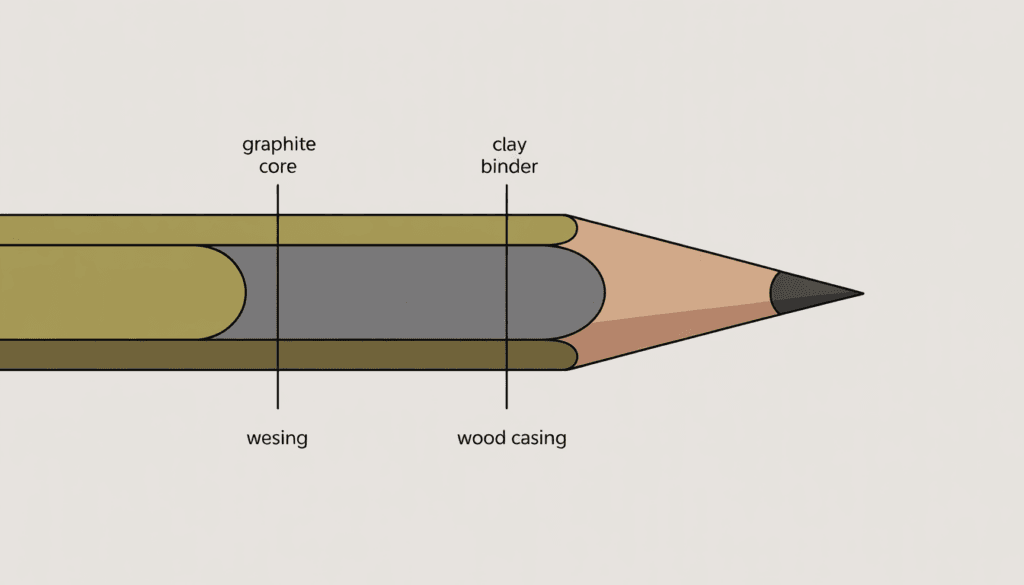
Pencil lead is made from a precise mix of graphite and clay — no actual lead involved.
Despite the name, pencil lead contains no actual lead. Modern pencil lead is made from a mixture of graphite and clay , fired at high temperatures to create a solid, smooth core. The ratio of graphite to clay is what determines how hard or soft the pencil lead is — more harder clay, lighter lead, while more graphite produces softer, darker marks.
Graphite is a naturally occurring form of carbon with a layered molecular structure. When pencil lead is pressed against paper, those layers of graphite slide off and adhere to the surface — which is why pencil marks look the way they do and why they can be erased. The clay acts as a binder, holding the graphite together and giving the pencil lead its structural strength.
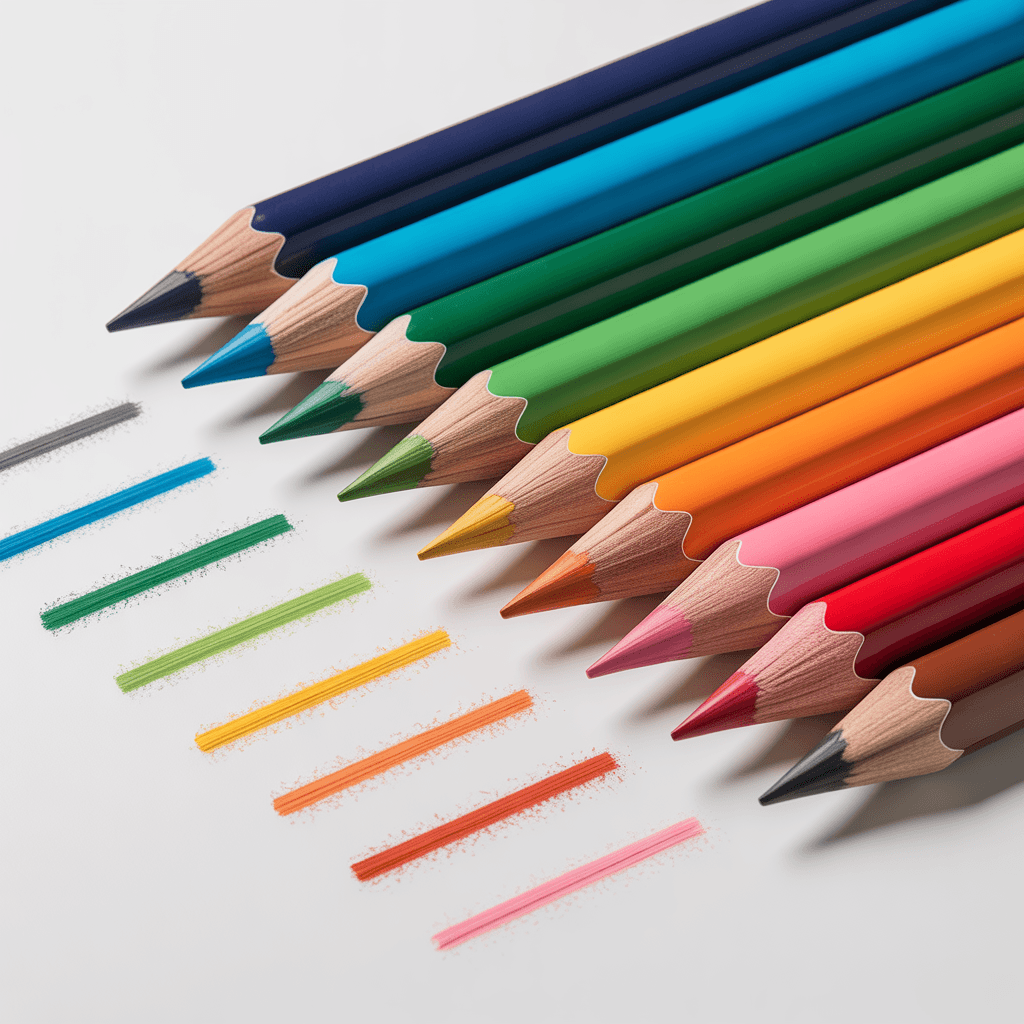
Some specialty pencil lead formulations also include waxes, polymers, or other additives to improve smoothness, reduce breakage, or alter the color of the mark. Colored pencil lead, for example, replaces graphite with pigment and uses a wax or oil binder instead of clay.
At Shiny You, we work with these proven material standards to produce writing instruments that are consistent, smooth, and reliable for everyday use across schools, offices, and creative studios.
2. A Brief History of Pencil Lead
The story of pencil lead begins in 1565 in Borrowdale, England, where a large deposit of pure graphite was discovered. Local farmers initially used the material to mark sheep, but it quickly became clear that this soft, dark mineral had remarkable writing properties. Early users wrapped sticks of raw graphite in string or sheepskin to make them easier to hold — the world’s first pencils.
For over two centuries, pencils were made from solid graphite — which was soft, fragile, and inconsistent in quality. The real breakthrough came in 1795 when French chemist Nicolas-Jacques Conté developed the process of mixing powdered graphite with clay and firing it in a kiln. This method — known today as the Conté process — allowed manufacturers to control the hardness of pencil lead precisely, produce it at scale, and make consistent grades from the same materials.
The Conté process is still the basis for pencil lead manufacturing today. Despite centuries of technological advancement, the fundamental formula — graphite, clay, heat — remains unchanged. What has improved is the precision of the mix, the quality of the raw materials, and the consistency of the firing process.
Understanding this history helps explain why pencil lead grades exist and why they matter. Each grade represents a specific graphite-to-clay ratio, carefully calibrated to produce a predictable result on paper.
3. Pencil Lead Grades Explained
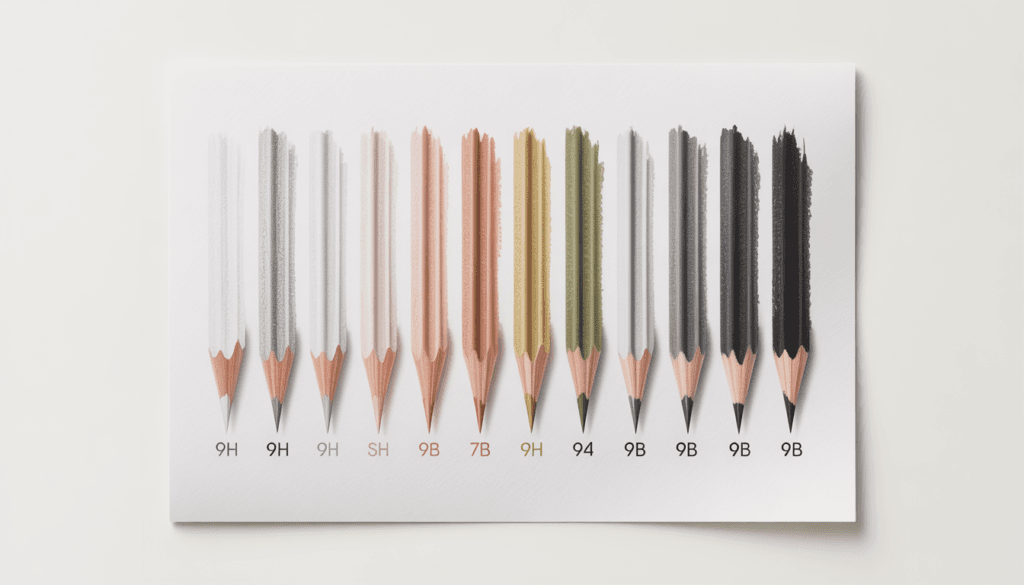
The full pencil lead scale — each grade produces a distinctly different mark on paper.
Pencil lead is graded on a scale that runs from very hard to very soft. There are two grading systems in common use — the HB scale used in most of the world, and the numeric scale used primarily in the United States.
On the HB scale:
- H grades (Hard) — lighter marks, less graphite, more clay. The higher the H number, the harder and lighter the pencil lead. Ranges from H to 9H.
- B grades (Soft) — darker, richer marks, more graphite, less clay. The higher the B number, the softer and darker the pencil lead. Ranges from B to 9B.
- HB — the exact middle of the scale. The most common pencil lead grade worldwide, used for everyday writing.
- F (Fine Point) — slightly harder than HB. Stays sharp longer and is preferred by those who want a fine line without going fully into H territory.
On the numeric scale used in the US, the most common grades are #1 (soft, equivalent to B), #2 (equivalent to HB), #2.5 (between HB and H), and #3 and #4 (progressively harder). The #2 pencil lead is the American standard for standardized tests and general writing.
Most people will never need to venture beyond the 2H to 4B range. But artists, architects, and specialists working with technical drawings may use the full range from 9H to 9B.
4. 7 Types of Pencil Lead and Their Best Uses
Different tasks call for different pencil lead types. Here are the 7 most useful grades and the situations where each one excels.
1. 4H – Technical Drawing & Precision Work
Very hard pencil lead that produces fine, precise, light lines. Ideal for architects, engineers, cartographers, and technical illustrators who need accuracy above all else. The marks are faint and resist smearing, making 4H pencil lead excellent for layouts that will be inked over later.
2. 2H – Light Sketching & Initial Outlines
Slightly softer than 4H but still firmly in the hard category. 2H pencil lead is the choice of designers and illustrators who need a light guide sketch before committing to ink or darker lines. The marks erase cleanly and don’t indent the paper.
3. H – General Drafting & Clean Line Work
A versatile hard grade that leaves clean, controlled lines. H pencil lead is used in drafting, note-taking in technical fields, and any application where a neat, non-smearing line is required. It holds a sharp point well.
4. HB – Everyday Writing & General Use
The most widely used pencil lead grade on the planet. HB sits perfectly at the midpoint of the scale — dark enough to read easily, hard enough not to smear with light contact. It works on virtually any paper and suits most writing tasks. This is the pencil lead in the standard school pencil and the #2 pencil used in exams worldwide.
5. 2B – Shading, Drawing & Illustration
Soft and expressive, 2B pencil lead is a favorite among illustrators, comic artists, and students learning to draw. It blends beautifully, responds dynamically to pressure changes, and produces marks that have real visual weight. 2B is the entry point into the soft grades — smooth enough to feel luxurious but not so soft that it breaks constantly.
6. 4B – Expressive Art, Portraits & Texture
Very soft pencil lead delivering rich, dark tones with a velvety feel. 4B is used extensively in life drawing, portrait work, and expressive freehand sketching. It smudges easily which, in the right hands, is a feature not a bug — allowing artists to blend large areas of tone with a finger or blending stump.
7. 6B – Deep Shading, Fine Art & Bold Marks
One of the softest widely available pencil lead grades. 6B produces dramatic, near-black marks with almost no pressure required. Professional artists use 6B pencil lead for the darkest shadows, bold gestural drawings, and any work that demands maximum contrast. It requires a gentle touch and careful handling — but in skilled hands, it is incomparably expressive.
5. How to Choose the Right Pencil Lead
Choosing the right pencil lead comes down to three key factors: your purpose, your paper, and your natural pressure.
Purpose: Are you writing, sketching, drafting, or creating finished artwork? Each activity benefits from a different zone of the pencil lead scale. Writing calls for HB to F. Sketching benefits from HB to 2B. Fine art and shading work best with 2B to 6B. Technical work requires H to 4H.
Paper: The surface you’re working on affects how pencil lead performs dramatically. Smooth paper (like printer paper or hot-press watercolor paper) works best with harder pencil lead grades — the surface offers little tooth for soft graphite to grip. Textured or rough paper (like cartridge paper or cold-press watercolor paper) works beautifully with softer pencil lead, which fills the grain and produces rich, complex marks.
Pressure: Every person has a natural writing or drawing pressure. If you press hard, a softer pencil lead will smear and break. Go one or two grades harder than you instinctively reach for. If you have a light touch, softer grades will give your marks the visibility they need without requiring you to push harder.
A simple test: write a paragraph with HB pencil lead on your usual paper. If the marks smear when your hand brushes across the page, go harder (H or 2H). If the marks are too faint or require too much pressure, go softer (B or 2B).
6. Pencil Lead for Artists vs. Writers
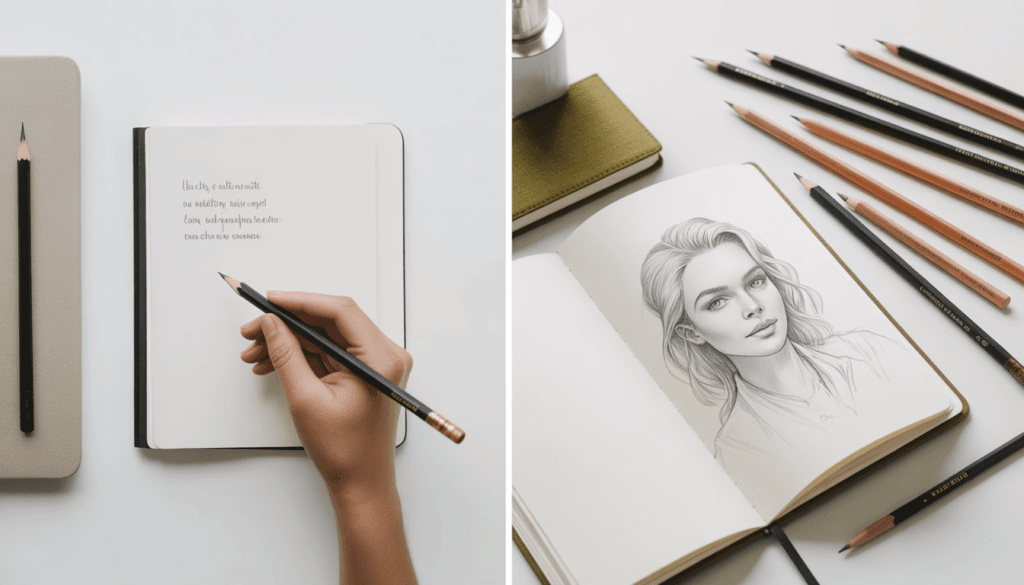
Writers need consistency. Artists need range. The right pencil lead makes all the difference.
Artists and writers have fundamentally different needs when it comes to pencil lead — and understanding this divide helps both groups make better choices.
Writers need pencil lead that is consistent, clean, and easy to erase. The priority is legibility and comfort over long writing sessions. HB and F grades are the standard choice — they stay sharp, resist smearing on most papers, and provide enough contrast to read easily. For those who write lightly, B grade pencil lead can be more comfortable. Writers rarely need to go beyond the H to 2B range.
Artists need a full toolkit of pencil lead grades to build contrast, depth, and texture within a single drawing. A professional artist’s pencil lead kit typically covers at minimum: 2H or H for fine detail and initial outlines, HB for mid-tones and general work, 2B for shading and medium darks, 4B for deep shadows and blending, and 6B for the richest, darkest accents.
According to Faber-Castell , one of the world’s leading pencil manufacturers, using a deliberate range of pencil lead grades — rather than a single grade — is the most effective technique for adding depth, volume, and realism to pencil drawings. The contrast between a 2H line and a 6B shadow, on the same page, is what gives a drawing its three-dimensional quality.
7. Best Pencil Lead for Students
Students have unique pencil lead needs depending on their age, subject, and workload. Here is a quick breakdown by use case.
Primary school students benefit most from softer pencil lead — B or 2B. Young children tend to have a lighter touch and less developed hand strength, so softer pencil lead produces clear, visible marks without requiring excessive pressure. It also makes writing more comfortable over long periods.
Secondary and high school students are well served by HB pencil lead for general writing and exams. For art classes, a range from H to 4B is recommended. For technical subjects like design and engineering, 2H to H pencil lead is the practical choice.
University and college students in creative disciplines should invest in a full range of pencil lead grades. Architecture students in particular will use everything from 6H for fine construction lines to 2B for expressive concept sketches.
For standardized testing, always check the requirements — most standardized tests in the US specifically require #2 (HB equivalent) pencil lead for optical mark recognition to work correctly on answer sheets.
8. Mechanical Pencil Lead vs. Wooden Pencil Lead
Mechanical pencils use replaceable pencil lead cartridges, while traditional wooden pencils have the lead core bonded within the wood casing. Both types use the same graphite-clay composition, but there are practical differences worth understanding.
Mechanical pencil lead comes in standard diameters — most commonly 0.5mm and 0.7mm, with 0.3mm and 0.9mm also available. Thinner mechanical pencil lead (0.3mm, 0.5mm) is more prone to breakage and requires a lighter touch. Thicker lead (0.7mm, 0.9mm) is more robust and forgiving. Mechanical pencil lead is convenient for consistent line width and eliminates the need for sharpening.
Wooden pencil lead can be sharpened to any point — from a fine needle tip to a broad chisel edge — giving artists and writers more flexibility. The wood casing also provides a more comfortable grip for many users. The trade-off is that wooden pencils need regular sharpening and the lead diameter changes as the pencil wears down.
For writing tasks, the choice between mechanical and wooden pencil lead is largely personal preference. For drawing and art, most artists prefer wooden pencils for their versatility, though many also keep mechanical pencils for precise detail work.
9. How to Avoid Breaking Pencil Lead
Few things are more frustrating than pencil lead that snaps the moment you apply pressure. Here are the most effective ways to prevent it.
- Sharpen slowly and at a low angle. Aggressive sharpening creates stress fractures in the pencil lead core, which show up later as snapping just below the tip. Rotate the pencil slowly against the sharpener blade.
- Never drop your pencils. The impact of a drop can crack the pencil lead internally throughout the entire length of the core, even when the wood casing shows no damage. The lead will snap every time you sharpen it until you’ve worked through the damaged section.
- Store pencils horizontally. Storing pencils point-down in a cup puts constant stress on the tip. Horizontal storage in a case or tray keeps the lead protected.
- Use a sharp-bladed sharpener. A dull blade drags and twists against the wood rather than cutting cleanly, putting lateral stress on the pencil lead. Replace sharpener blades regularly.
- Match lead softness to your pressure. Using very soft pencil lead (4B, 6B) with a heavy hand is a recipe for constant breakage. Either lighten your touch or use a harder grade.
- For mechanical pencils, extend only a small amount of lead. Extending more than 3-4mm of lead beyond the tip dramatically increases the chance of breakage under writing pressure.
10. How to Care for Your Pencils
Good pencil lead in a well-maintained pencil performs far better than the same lead in a neglected one. A few simple habits make a significant difference.
Keep pencils in a case when not in use — loose pencils in a bag or drawer get knocked around, leading to the internal lead fractures described above. A simple roll-up pencil case or rigid pencil box is all you need.
For wooden pencils, invest in a quality sharpener. Hand-cranked or blade sharpeners that allow you to control the angle produce a better point than automatic electric sharpeners for most applications. For very soft pencil lead grades, a knife or scalpel gives the most control and the least stress on the core.
Keep your pencil lead clean. Graphite picks up oils from your hands, dust, and other particles that can affect how smoothly it writes. For artists, keep a kneaded eraser nearby to clean the lead tip between strokes when working on detailed areas.
11. Where to Buy Quality Pencil Lead
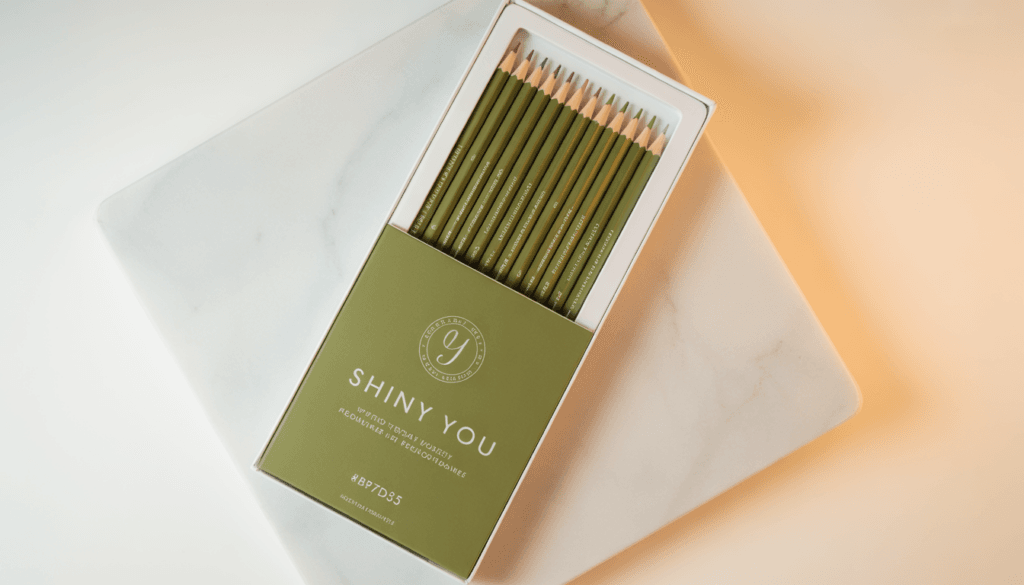
Quality pencil lead, beautifully packaged — available for wholesale and OEM orders from Shiny You Stationery.
Whether you’re buying individual pencils for personal use or sourcing in bulk for a school, office, or retail operation, the quality of the pencil lead matters enormously. Inconsistent pencil lead breaks mid-stroke, skips on paper, produces uneven marks, and creates a frustrating experience for writers and artists alike.
When evaluating pencil lead quality, look for consistency across the batch — every pencil of the same grade should perform identically. Look for smooth laydown without scratching or skipping. Look for clean erasability without ghosting or paper damage. And look for break resistance appropriate to the grade — soft grades will always be more fragile than hard ones, but good manufacturing minimizes this.
Shiny You Stationery offers a full range of strumenti di scrittura featuring smooth, consistent pencil lead suited for school, office, and professional creative use. All products are available for wholesale and custom OEM orders, shipped to businesses worldwide from our manufacturing facility in Ningbo, China.
For bulk orders, private label products, or custom specifications — including specific pencil lead grades, barrel designs, or branded packaging — contact our team to discuss your requirements.
The right pencil lead doesn’t just write better — it makes the entire experience better. From crisp 4H lines in a technical drawing to the deep, velvety blacks of a 6B portrait sketch, every grade of pencil lead has a purpose. Now that you know what each one does, you’ll never reach for the wrong pencil again.