

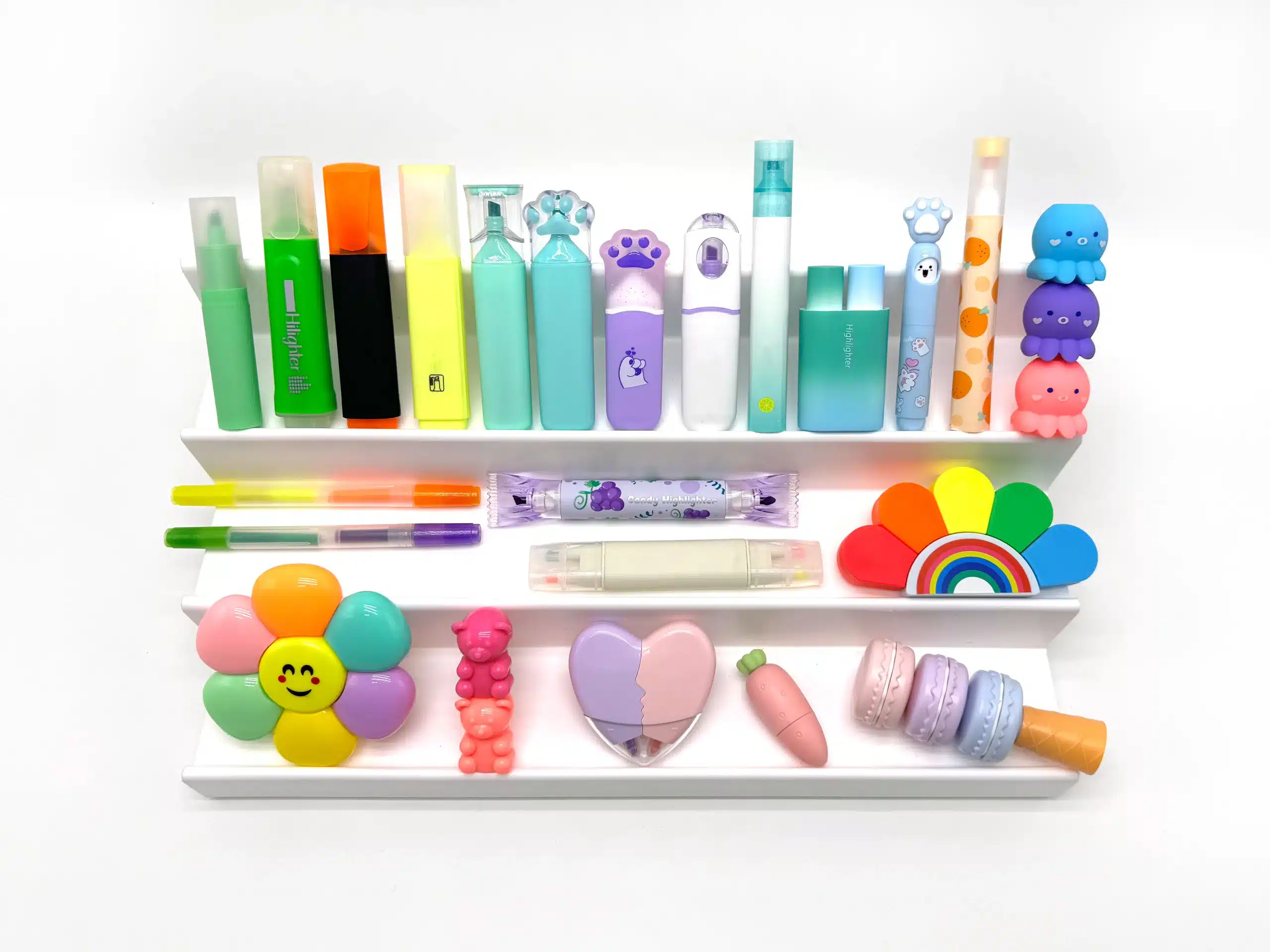
The Ultimate Guide to Highlighter Pens: From Glow to Eco-Friendly Designs
What Is a Highlighter Pen?
A highlighter pen is a writing instrument designed to accentuate and draw attention to specific sections of text using translucent, fluorescent ink. Unlike regular markers, highlighters ensure that the underlying text remains readable, leveraging bright colors—commonly yellow—that glow and stand out without obscuring. The vivid color is typically derived from fluorescent compounds such as pyranine or rhodamines. Since their invention, highlighters have become one of the most recognizable tools in modern education and office culture.
A Brief History and Evolution
The modern highlighter was invented in 1963 by Francis J. Honn of Carter’s Ink Company, who introduced the “Hi-Liter.” Inspired by earlier Japanese felt-tip pens from Yukio Horie, this innovation soon spread worldwide. Honn’s original concept was simple: create a translucent marker that could emphasize words without covering them. It was a revolutionary idea for its time, since most writing instruments either darkened text or made it illegible.
In 1978, Avery Dennison acquired rights to the Hi-Liter, making it a staple in classrooms and offices. By the late 20th century, highlighters had become synonymous with studying, editing, and information retention. The popularity of these pens coincided with the boom of standardized testing and modern office environments, where quick note-taking and organization became essential.
Over the decades, the design of highlighters evolved dramatically. From the original chisel-tip model, new forms appeared: bullet tips for fine highlighting, pastel tones for aesthetics, and even erasable inks that catered to students’ needs for correction. Modern chemistry also allowed for inks that were brighter, longer-lasting, and safer for both humans and the environment.
The Science Behind the Glow
What makes highlighters unique is their ability to “glow.” This effect comes from fluorescence: the ink absorbs ultraviolet (UV) light, which the human eye cannot see, and re-emits it as visible light. This creates the impression that highlighted words shine more intensely than surrounding text. Compounds like pyranine are used for yellow ink, while rhodamines produce pink and orange shades. These chemicals are safe in the concentrations used for stationery and are specifically chosen for their visibility and stability.
Interestingly, yellow became the dominant color for highlighters not only because it is bright, but also because it is “photocopy-safe.” When early office workers copied documents, yellow ink was invisible on most photocopy machines, allowing text to remain clear. This practicality cemented yellow’s dominance, although today’s highlighters come in a wide spectrum of neon and pastel shades.
Types of Highlighters
Highlighters today come in various forms to meet the needs of students, professionals, and artists alike:
- Liquid Ink Highlighters: Bold and vibrant marks, ideal for high visibility.
- Gel Highlighters: Smear-proof, no bleed-through, suitable for thin or glossy paper.
- Pastel Highlighters: Soft tones that are easy on the eyes, popular in journaling.
- Erasable Highlighters: Allow users to correct and adjust highlighted content.
- Glitter Highlighters: Add sparkle for creative projects.
Recommended Highlighter Sets
Here are some innovative highlighter products that combine practicality with style, drawn from our own collection:
1. Pixel Chomp Highlighter Set – Bright Neon Colors
A playful yet practical choice, the Pixel Chomp Highlighter Set offers bright neon shades that make study sessions lively and effective.
2. Wholesale Custom Neon Flower Pen and Highlighter Set
Perfect for those who want stationery with personality, the Neon Flower Pen and Highlighter Set combines practicality with creative design, making it a standout in both classrooms and offices.
3. Wholesale Custom Neon 8-Pack Highlighter Set
For professionals or students who rely on multiple colors for organizing notes, the Neon 8-Pack Highlighter Set provides a versatile toolkit for color-coding and efficient study.
Practical Uses and Benefits
- Education: Helps students emphasize key points, definitions, and formulas.
- Office Work: Used to mark important clauses in documents or highlight meeting notes.
- Creative Arts: Popular among crafters, journal enthusiasts, and artists.
- Digital Inspiration: Highlighters influenced modern “highlight” tools in word processors and apps.
In addition, psychologists have studied the cognitive impact of highlighting. When used properly, highlighting encourages active reading, boosts focus, and can improve long-term memory retention. However, experts also warn against “over-highlighting,” which diminishes effectiveness and makes all text look equally important.
Highlighters in Pop Culture and Digital Influence
Beyond classrooms and offices, highlighters have made their way into popular culture. Artists and designers use neon highlighter ink to create posters, album covers, and fashion statements. In digital culture, the concept of “highlighting” has been adopted widely in apps such as Microsoft Word, Google Docs, and Kindle e-readers. The act of selecting and marking digital text with bright colors is a direct legacy of the physical highlighter pen.
Highlighters have also become symbols of productivity and organization on social media. Platforms like Instagram and TikTok showcase studygrams—aesthetic note-taking communities where pastel highlighters, bullet journals, and neat layouts are central to the culture. Thus, the highlighter has transcended its role as a tool and become a lifestyle accessory for students and professionals alike.
Sustainability and Eco-Friendly Trends
Like many stationery items, highlighters face scrutiny for their environmental impact. Traditional disposable highlighters contribute to plastic waste. In response, companies now produce refillable models, biodegradable bodies, and non-toxic ink formulations. These innovations reduce waste and align with global trends toward sustainability.
Some brands even experiment with highlighter pencils or wax-based alternatives that eliminate plastic casings altogether. Educational institutions and eco-conscious buyers increasingly prefer bulk packs and long-lasting designs, pushing the industry toward greener solutions. In this sense, highlighters mirror the broader stationery market’s transition to responsible manufacturing.
How to Choose the Right Highlighter
Consider ink type, tip shape, and intended use. Yellow is best for general visibility, while pastel tones suit long reading sessions. For eco-conscious buyers, refillable and recyclable designs reduce waste. Professionals may prefer multi-pack kits for efficient color-coding, while creative users might choose glitter or pastel tones for aesthetic projects.
Expert Tips for Highlighting
- Highlight sparingly—only the most critical text.
- Color-code by category (dates, definitions, names).
- Review your highlights regularly to reinforce memory.
- Store horizontally to prevent ink pooling.
- Use pastel tones for long reading sessions to avoid eye strain.
Conclusion
The highlighter pen is far more than a simple stationery tool. From its accidental invention in 1963 to today’s wide variety of designs and eco-friendly options, it remains a key part of learning, working, and creative expression. The science behind its glow, its cultural significance, and its digital legacy all testify to its lasting impact. Whether you are a student revising for exams, a professional organizing reports, or an artist adding neon flair to your work, the highlighter is an indispensable companion.
By choosing the right highlighter—whether a neon set for study, a pastel collection for journaling, or an eco-friendly refillable option—you can transform how you read, learn, and create. Its history, science, and innovation show that even the simplest stationery items can shape the way we think, work, and communicate.