

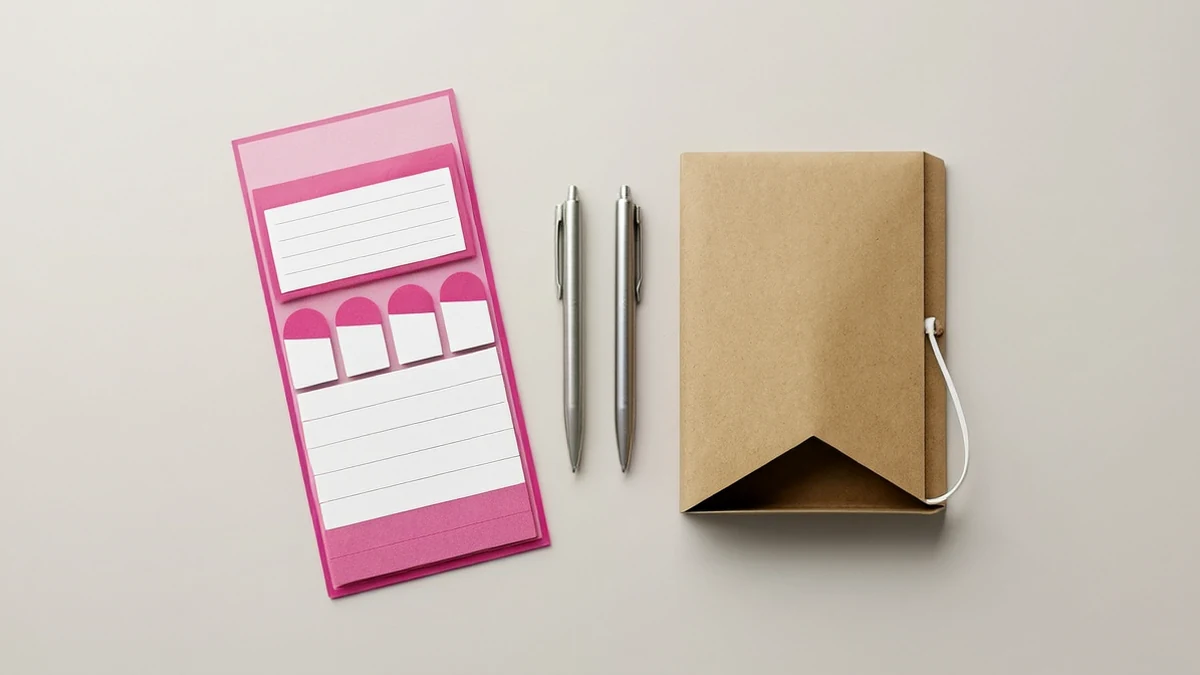
Custom Business Stationery: Bulk Branding & Buying Guide
Business stationery can refer to anything from letterhead to notebooks. In this guide, custom business stationery means the paper, writing and desk products a business uses or distributes in bulk: notebooks, notepads, pens, folders, desk accessories and coordinated kits.
For a B2B buyer, the work goes beyond placing a logo on a product. The items must suit the way people work, branding must remain consistent across different materials, packaging must match the distribution method, and reorder specifications must remain clear.
This guide explains how to plan the product mix, choose a sourcing route, approve branding and samples, confirm MOQ, and build a realistic production and delivery schedule.
Table of Contents
- Define how the stationery will be used
- Build a practical product mix
- Choose stock, logo customisation or full custom development
- Control branding and product specifications
- Match packaging to distribution
- Understand MOQ and quotation variables
- Plan samples, production and delivery
- Confirm quality and compliance requirements
- Prepare for rollout and reorders
- Send a complete quotation brief
1. Define How the Stationery Will Be Used
Start with the user and the distribution method rather than a product catalogue. The same notebook may require different paper, branding and packaging when used at a desk, included in an onboarding kit or sold through a distributor.
| Use case | Suitable starting point | Main procurement priority |
|---|---|---|
| Daily internal office use | Notebooks, notepads, pens, folders and desk accessories | Durability, practical specifications and straightforward replenishment |
| Employee onboarding | A coordinated notebook, pen and small accessories | Consistent presentation and individual packing |
| Meetings and business events | Notebooks, pens and easy-to-carry paper products | Useful formats, clear branding and delivery before the event |
| Distributor or private-label supply | A coordinated range across several product types | Item-level specifications, packaging, barcodes and reorder control |
Separate everyday office requirements from one-off gifting requirements. A daily-use range usually benefits from simple, repeatable specifications; a gift programme may place more weight on presentation packaging. Keeping these briefs separate makes quotations easier to compare.
2. Build a Practical Product Mix
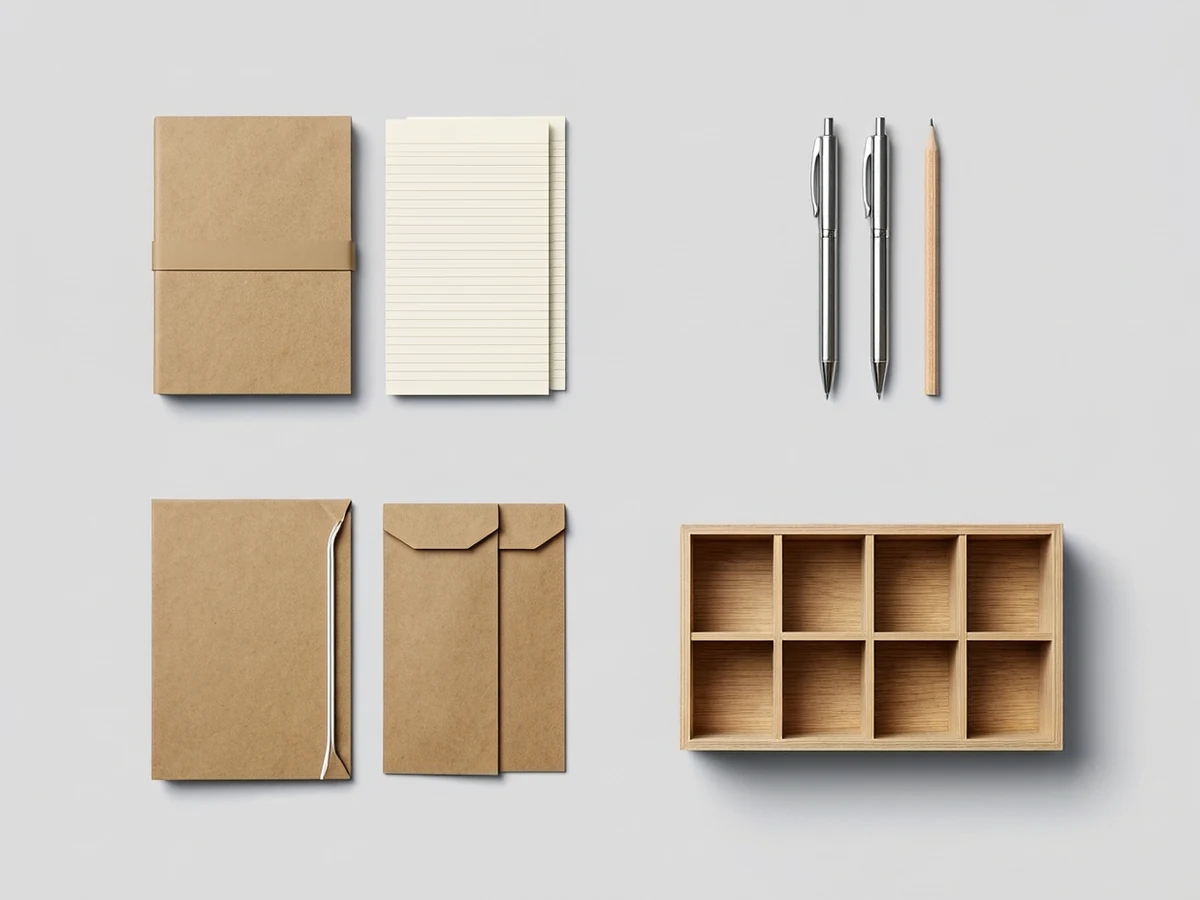
A coordinated range does not need to contain every available office product. Begin with the items people use most, then add accessories only when they serve a clear purpose.
| Product group | Examples | What to specify |
|---|---|---|
| Paper and planning | Notebooks, journals, notepads, sticky notes and planners | Size, page count, ruling, paper, cover material and binding |
| Writing instruments | Ballpoint pens, gel pens, pencils, highlighters and markers | Writing point, ink colour, barrel material, clip and branding area |
| Filing and paper organisation | Folders, binders, document wallets and index products | Dimensions, material, closure, capacity and intended contents |
| Desk organisation | Pen holders, trays and related desktop accessories | Dimensions, material, stability and packing method |
| Coordinated kits | A selection of compatible items packed together | Components, quantities per kit, inserts and individual packaging |
Browse the office stationery range to review the broader product groups. For core writing and paper items, see notebooks and journals and writing instruments.
When comparing products, record specifications item by item. A shared colour palette can make the range look coordinated, but it does not remove the need to approve each product’s material, construction and branding method.
3. Choose Stock, Logo Customisation or Full Custom Development
The sourcing route affects minimum quantity, development work and timing. Decide the route before asking for comparable prices.
| Route | What it involves | When it is useful |
|---|---|---|
| Stock products | Existing products and specifications, subject to current availability | Product evaluation, short-term requirements or range testing |
| Logo customisation on an existing product | An established product with suitable logo, colour or packaging customisation | A branded programme without developing every component from scratch |
| Full custom development | Product structure, materials, artwork, branding and packaging developed around the brief | A defined private-label range or a business programme with specific functional requirements |
Selected stock products can start from one carton, subject to availability and the product’s packing quantity. Custom MOQ starts from 500 pieces per style on suitable products; the final minimum is confirmed in the quotation.
Buyers can begin with existing product directions, supply artwork or specifications, or start with an idea. The custom stationery manufacturing process connects product selection, materials, branding, sampling and packaging. For range-based purchasing, review the available wholesale supply options.
4. Control Branding and Product Specifications
Branding should be reviewed together with the product material. A method that works on a notebook cover may not suit a pen barrel or a fabric case.
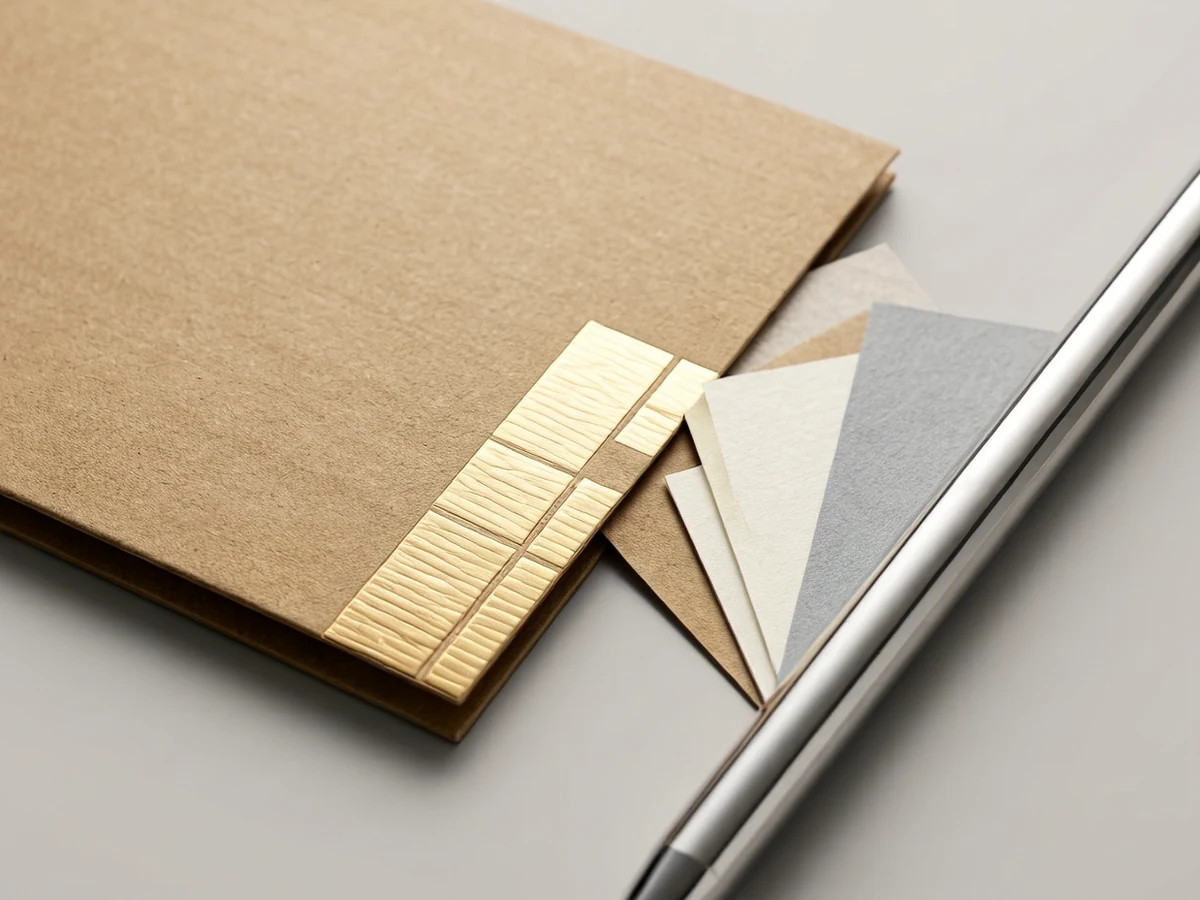
Depending on the product, options can include screen printing, foil stamping, embossing or debossing, UV printing, offset printing and full-wrap artwork. The suitable method, printable area and artwork requirements are confirmed for the selected item.
Before sampling, provide or confirm:
- The current logo artwork and permitted variations.
- Colour references and the intended placement on each product.
- Product dimensions and the available branding area.
- Packaging artwork, labels and any required product information.
- The version number or approval status of each artwork file.
Then turn the visual direction into product-level specifications:
| Item | Physical details to approve |
|---|---|
| Notebook or notepad | Paper, shade, ruling, page count, binding, cover, finish and logo position |
| Pen or pencil | Barrel and trim, writing point, ink or lead requirement, clip and branding position |
| Folder or document wallet | Material, dimensions, closure, capacity and printing area |
| Desk accessory | Material, dimensions, construction and protective packing |
| Multi-item kit | Every component, the quantity of each component and the approved packing layout |
Use the approved sample as the production reference. Changes to agreed quality, specifications, safety, compliance or key functions should be reviewed and approved by the buyer rather than introduced silently during production.
5. Match Packaging to Distribution
Packaging should follow the route from the supplier to the final user. A central office delivery, an individually distributed onboarding kit and a reseller order do not necessarily need the same pack format.
| Distribution method | Packaging questions to resolve |
|---|---|
| Bulk delivery to an office or warehouse | Inner and outer carton quantities, product protection, carton labels and receiving requirements |
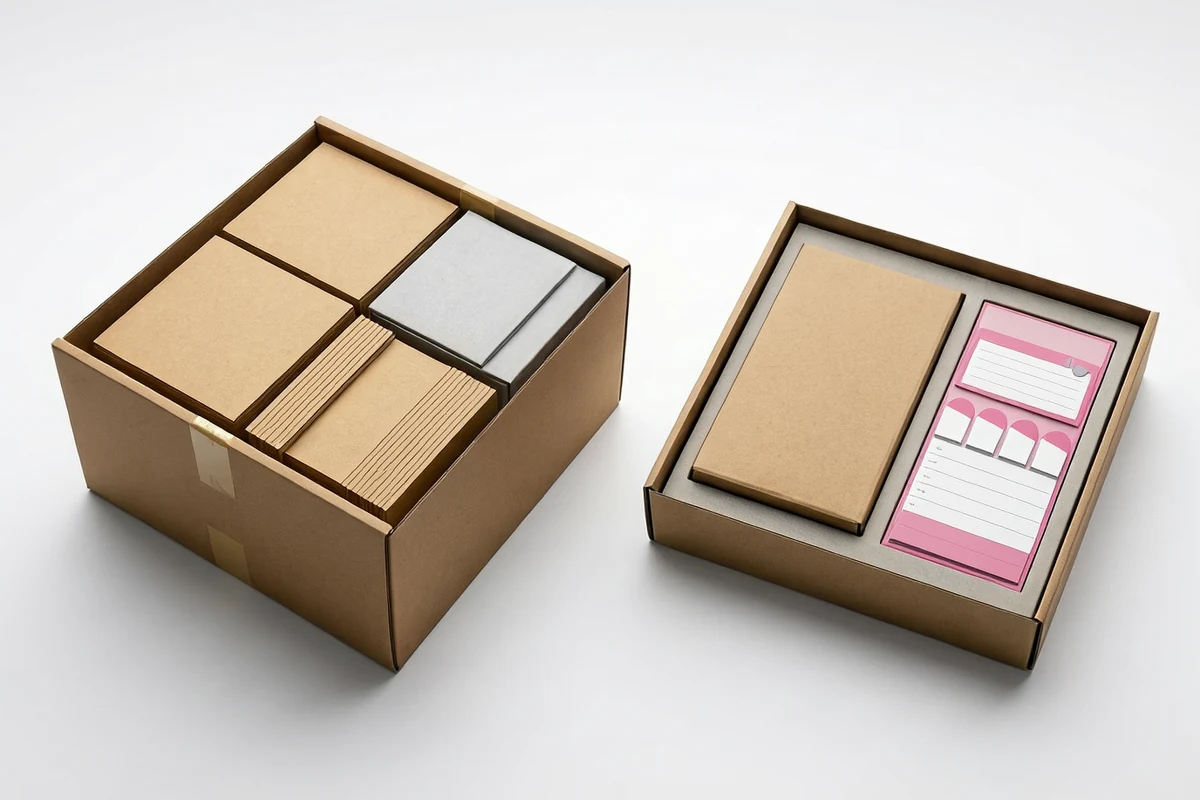
| Individually distributed kits | Component layout, protective inserts, individual boxes or sleeves and handling during delivery |
| Distributor or private-label supply | Private-label packaging, barcode and SKU matching, product labels and transport cartons |
| Retail-ready presentation where required | Shelf or display format, planogram constraints and retail-ready packaging |
Packaging options can include protective inserts, private-label packs, retail-ready formats, display units and transport cartons. Develop the packaging with the product so that dimensions, artwork and labels are approved before production. The stationery packaging guide provides a broader overview of available formats.
6. Understand MOQ and Quotation Variables
MOQ is tied to the actual product and production route:
- Selected stock products: from one carton, subject to availability and carton packing.
- Custom products: from 500 pieces per style on suitable products.
- Final terms: confirmed in the quotation according to the product, materials, colours, process, tooling, packaging and quantity.
Multiple suitable categories can be coordinated within one project, but a combined project does not automatically mean that every item shares the same MOQ. Ask for item-level confirmation as well as the overall packing and delivery plan.
The main quotation variables include:
- Product construction and material.
- Colours and branding process.
- Tooling or other development requirements.
- Packaging and assembly.
- Quantity per item or design.
- Inspection, testing or documentation requirements.
- Destination and required arrival date.
Where a target price band is fixed, ask to compare practical options and their trade-offs. Any change affecting quality, safety, compliance or key functionality should remain subject to buyer approval. For more detail, see Stationery MOQ: Stock Products and Custom Orders.
7. Plan Samples, Production and Delivery
Sampling can take from 24 hours to 14 days, depending on the product and process. Production takes approximately 10–45 days and is confirmed per project. Transport time is planned separately for the destination and delivery schedule.
| Milestone | What to confirm before moving forward |
|---|---|
| Brief review | Products, intended use, quantities, target market, price band and required arrival date |
| Product and cost review | Materials, construction, branding, packaging and any alternatives |
| Sample development | Sample type, artwork version, cost, freight and expected timing |
| Sample approval | Approved product, branding, packaging and written specification |
| Production | Confirmed quantity, production schedule and inspection requirements |
| Delivery planning | Production completion, departure and destination arrival as separate dates |
Sample costs, freight, timing and any credit against a subsequent order are confirmed in the quotation. Do not treat production completion, departure from origin and arrival at the destination as the same date.
8. Confirm Quality and Compliance Requirements
Quality requirements should be established before production, not added immediately before shipment.
Shiny You’s inspection approach uses AQL 2.5 sampling under ISO 2859-1, against the approved sample, agreed specifications and buyer requirements. The inspection scope, acceptance criteria and any third-party testing are confirmed for each order.
Documentation must match the selected factory, product and destination market:
- Factory assessments under amfori BSCI, SMETA (Sedex), FCCA and SCAN are coordinated for the relevant facility.
- FSC-certified sourcing options can be reviewed for suitable products.
- EUDR-related traceability documentation support is available where applicable.
- Product testing is determined by the product, materials, intended use, user age group and destination market.
Available documents depend on the selected factory, product and order. FSC certification alone does not establish EUDR compliance. Raise audit, testing and traceability requirements during the brief so their scope can be checked before production. See Stationery Supplier Audits & Product Compliance: A Buyer’s Guide for the document-checking framework.
9. Prepare for Rollout and Reorders
A reorder should not require reconstructing the original specification from emails. Maintain a simple item record for each product:
- Product name and internal SKU.
- Approved sample and specification version.
- Materials, colours, dimensions and branding method.
- Artwork and packaging version.
- Quantity per item and packing configuration.
- Inspection or documentation requirements.
- Destination and required arrival date.
For a multi-location rollout, also confirm how products will be allocated and packed for each destination. Before reordering, check whether any material, artwork, packaging or user requirement has changed. If it has, review whether a new approval sample is needed.
10. Send a Complete Quotation Brief
A useful initial brief can begin with a reference product, image, design or short idea. Including the following information helps the supplier identify the most useful next step:
| Brief item | What to provide |
|---|---|
| Intended use | Daily office use, onboarding, meetings, events or channel supply |
| Product list | Required items and any reference products or images |
| Specifications | Known dimensions, materials, colours, branding and packaging |
| Quantity | Estimated quantity per item or design |
| Market and channel | Destination market and how the products will be distributed |
| Price band | Target buying or project price range, where available |
| Timing | Required arrival date, not only the desired production date |
| Compliance | Audit, testing, material or traceability requirements |
| Artwork | Current files or a note that design development is required |
Working with Shiny You
SHINYYOU STATIONERY develops and supplies paper products, writing instruments, stationery sets, office and home-office organisation products, bags and related gifts for B2B buyers. Our founder, Janey Liu, entered the stationery industry in 1999.
We combine our own manufacturing capabilities with selected production partners. Buyers can choose from existing product directions, provide artwork or specifications, or begin with an idea. We coordinate product and cost options, samples, packaging, quality requirements and delivery planning around the project.
Next step: send your product list or idea, target market, estimated quantity, price band and required arrival date. We will review the suitable products, customisation route and information needed for quotation.
Request a custom business stationery quote
Browse office stationery
Catalogue, sample and specification enquiries: vip1@shinyyoustationery.com
Telephone: +86-574-88030226
FAQ
What products count as custom business stationery?
In this guide, the term covers customised notebooks, notepads, planners, pens, pencils, folders, desk accessories and coordinated kits used or distributed by a business. The appropriate range depends on the intended users and distribution method.
What is the MOQ for custom business stationery?
Selected stock products can start from one carton, subject to availability and packing quantity. Custom MOQ starts from 500 pieces per style on suitable products. The final minimum is confirmed in the quotation according to the product, materials, colours, process, tooling, packaging and quantity.
Can several stationery categories be coordinated in one project?
Yes, where the categories fit the brief. Specifications, sampling, packaging and production can be coordinated as one connected project, while the requirements and MOQ of each item are reviewed separately.
How long do sampling and production take?
Sampling takes from 24 hours to 14 days depending on the product and process. Production takes approximately 10–45 days and is confirmed per project. Transport is scheduled separately according to the destination and required arrival date.