


How to Choose the Right Stationery Manufacturer 2026
How to Choose a Stationery Manufacturer for Your Business in 2026
Learning how to choose a stationery manufacturer is the single decision that determines whether your next 12 months of orders run smoothly or turn into a string of delays, failed QC batches, and warehouse space you can’t sell through.
In 2026, with tighter compliance rules across the EU and US and retail buyers auditing suppliers harder than ever, the gap between a reliable stationery manufacturer and a risky one has never been wider. This guide walks through every factor you need to check before you sign a purchase order — from certifications to MOQ structure to lead times — so you can vet a supplier with confidence instead of guesswork.
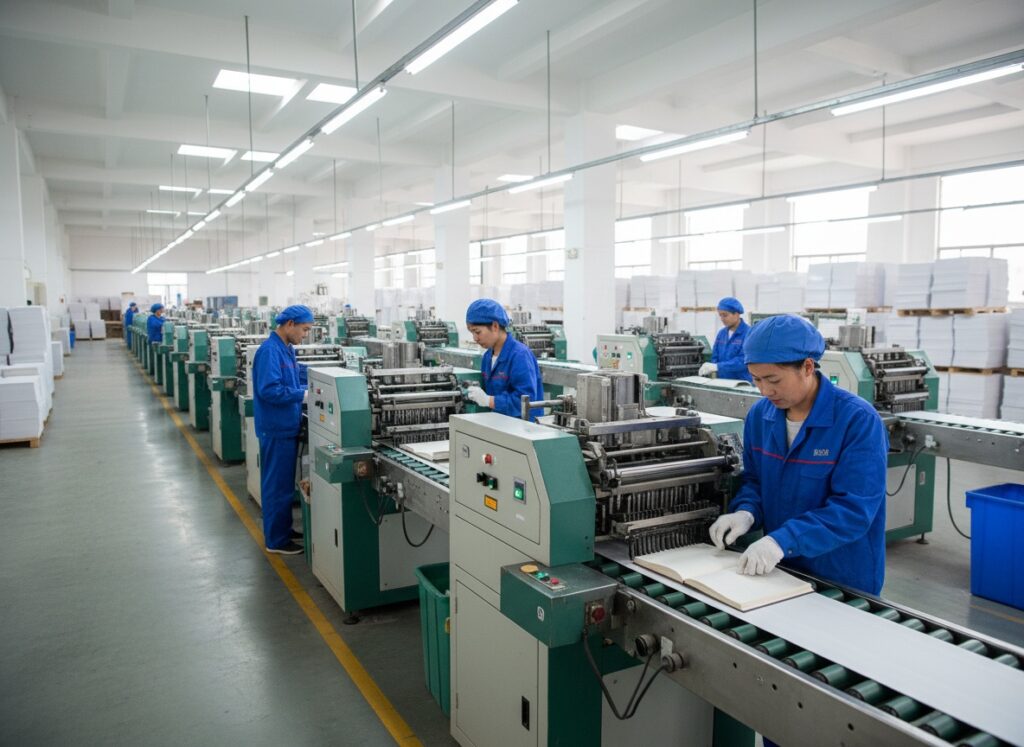
Inside a wholesale stationery manufacturer’s production floor
Table of Contents
- Why Choosing the Right Stationery Manufacturer Matters More in 2026
- Stationery Manufacturer vs Trading Company: Know the Difference
- How to Verify a Stationery Manufacturer’s Certifications
- Understanding MOQ Structure With a Stationery Manufacturer
- Testing Private Label Capability Before You Commit
- Matching Lead Times to Your Selling Season
- Communication Standards to Expect From a Stationery Manufacturer
- Requesting References From Other Buyers
- Pricing Structure and Hidden Costs
- Final Checklist: How to Choose a Stationery Manufacturer
- Choose Shiny You as Your Stationery Manufacturer
1. Why Choosing the Right Stationery Manufacturer Matters More in 2026
Retail buyers are auditing suppliers harder than they did two years ago, which is exactly why getting how to choose a stationery manufacturer right matters more now than it used to. Deforestation-linked paper sourcing, unverified factory conditions, and inconsistent print quality are now deal-breakers, not minor flags. A stationery manufacturer that can’t produce certification paperwork on request is a liability you carry into every retail conversation you have downstream — long after the purchase order is signed.
Beyond compliance, 2026 has also brought faster product cycles. Retailers are refreshing stationery ranges twice a year instead of once, which means your stationery manufacturer needs to keep pace with shorter design-to-shelf windows without cutting corners on quality control. This is exactly why knowing how to choose a stationery manufacturer properly, rather than defaulting to the cheapest quote, matters more this year than last.
2. Stationery Manufacturer vs Trading Company: Know the Difference
The first structural question in how to choose a stationery manufacturer is whether you’re actually dealing with the factory or with a trading company reselling factory output. This single distinction affects pricing, quality control access, and certification authenticity.

Direct factory sourcing vs trading company intermediary structure
Direct manufacturer advantages:
- Factory-direct pricing — no markup layered on every order
- Certificates tied directly to the production facility, independently verifiable
- Quality control at the source, not discovered after shipment
- Genuine OEM capability at the manufacturing level, not outsourced to a third factory
How to verify: request the business license and confirm the “scope of business” includes manufacturing, then cross-check that the legal entity name on any certificate matches the company you’re actually negotiating with — this single check is often the fastest way to short-circuit how to choose a stationery manufacturer down to the real candidates. A mismatch usually means you’re talking to a trader, not a factory. A genuine stationery manufacturer will never hesitate to share this documentation.
3. How to Verify a Stationery Manufacturer’s Certifications
Ask for current certificates, not claims — certification checks are one of the most important steps in how to choose a stationery manufacturer you can actually trust. At minimum, a credible stationery manufacturer should hold:
- FSC Chain of Custody — confirms paper is sourced from responsibly managed forests. Verify directly through the FSC International database rather than taking a logo badge on a website at face value.
- RoHS compliance — required for any stationery product with electronic, magnetic, or metallic components sold into the EU.
- BSCI or Sedex audit reports — check via amfori.org for factory-level social compliance, now required by most European retail chains at PO stage.
- EUDR readiness — the EU Deforestation Regulation now requires traceability documentation for paper-based products entering EU markets.
Hesitation to share any of these documents is itself the biggest red flag you’ll get from a stationery manufacturer before you’ve even placed an order.
4. Understanding MOQ Structure With a Stationery Manufacturer
MOQs vary wildly by product category and customization level, and this is one of the most overlooked steps in how to choose a stationery manufacturer that fits your order volume. A stationery manufacturer quoting one blanket MOQ across your entire catalog either hasn’t priced it properly or is padding margin somewhere. Ask for MOQ broken down by:
- Base product (unbranded)
- Custom printing / logo application
- Custom packaging
- Color or material variants
A transparent stationery manufacturer will show you where each threshold comes from — tooling cost, minimum print run, or raw material lot size — not just quote a round number and move on. This transparency alone tells you a lot about how to choose a stationery manufacturer you can actually negotiate with long-term.
5. Testing Private Label Capability Before You Commit
“We do private label” means nothing without proof, and testing this claim properly is a step too many buyers skip when working out how to choose a stationery manufacturer for OEM production. Request:
- Photos of past private label runs for other clients (branding blurred is fine)
- Their artwork approval and pre-production sample process
- Turnaround time from approved sample to mass production
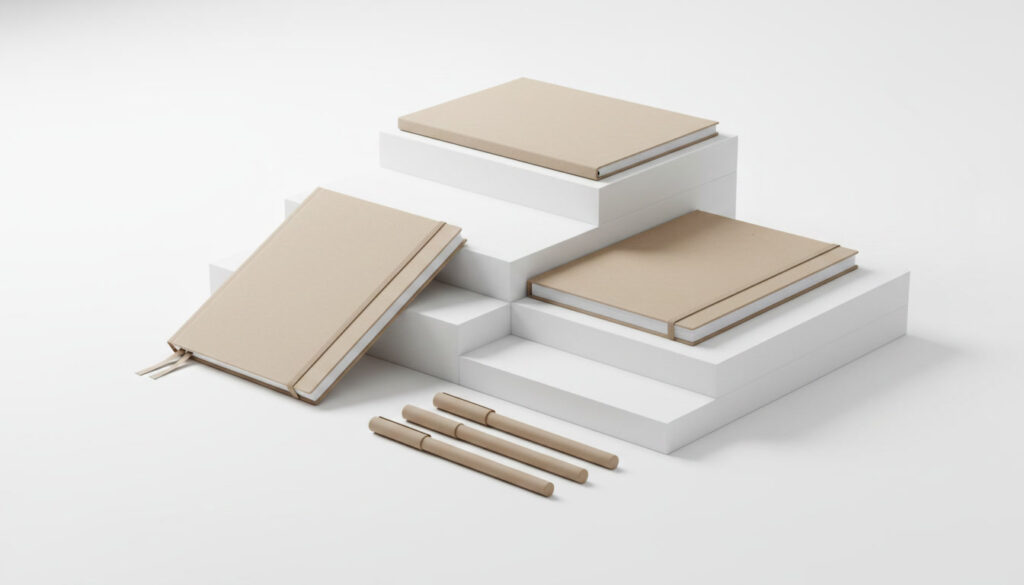
Pre-production private label samples from a stationery manufacturer
If a stationery manufacturer can’t produce a pre-production sample before full run, that’s a red flag for quality control on your first order — not a minor process gap you can work around later.
6. Matching Lead Times to Your Selling Season
Back-to-school and holiday-season buyers are the most lead-time-sensitive segment in the industry, which makes lead times a core part of how to choose a stationery manufacturer for seasonal orders. Confirm with any stationery manufacturer you’re evaluating:
- Production lead time (order confirmation to factory completion)
- Realistic shipping transit windows by destination
- Buffer time built in for QC failures or reprints
Ask what happens if a batch fails QC close to your ship date. A mature stationery manufacturer has a documented contingency plan — not a shrug and a delay that lands after your selling window has closed. This is exactly the kind of detail that separates a supplier who understands how to choose a stationery manufacturer matters from one who’s just filling an order.
7. Communication Standards to Expect From a Stationery Manufacturer
Time zone gaps and language barriers are manageable. Non-responsiveness isn’t, and communication standards are an easy way to gauge how to choose a stationery manufacturer before you’ve spent a cent. Before committing, test:
- Response time to a technical question, not a sales question
- Whether you get a dedicated account contact or a rotating sales rep
- Willingness to do a video call of the actual factory floor
How a stationery manufacturer handles a pre-sale technical question is a reliable preview of how they’ll handle a post-sale problem.
8. Requesting References From Other Buyers
A stationery manufacturer with 15-20 years of export experience should have buyer references in your target market who can speak to import compliance, customs experience, and after-sales support specific to your country’s requirements. Talking to these references directly is one of the most reliable ways to confirm how to choose a stationery manufacturer that will actually deliver.
Contact them directly — don’t settle for a testimonial quote on a website, since those are curated by the supplier, not independently verifiable.
9. Pricing Structure and Hidden Costs
The unit price quoted by a stationery manufacturer is rarely the full cost, which is why pricing structure deserves its own step in how to choose a stationery manufacturer rather than a quick glance at the quote sheet. Before comparing quotes across suppliers, confirm what’s included:
- Tooling or mold costs for custom shapes and packaging
- Sample costs and whether they’re credited back on bulk order
- Payment terms — deposit percentage and balance timing
- Freight terms (FOB, CIF, or EXW) and who arranges customs clearance
Two quotes with the same unit price can land at very different landed costs once these variables are factored in — another reason pricing structure belongs on your how to choose a stationery manufacturer checklist, not just your spreadsheet.
10. Final Checklist: How to Choose a Stationery Manufacturer
Run through this checklist on every shortlisted supplier before you commit — it’s the fastest way to pressure-test how to choose a stationery manufacturer against the factors that matter most.
- ☐ Confirmed direct manufacturer, not trading company
- ☐ Certifications verified independently through the issuing body
- ☐ MOQ broken down by customization level
- ☐ Pre-production sample process confirmed
- ☐ Lead time matches your selling season with buffer
- ☐ Reference buyer contacted directly
- ☐ Full landed cost confirmed, not just unit price
Knowing how to choose a stationery manufacturer is a due diligence process, not a quote comparison. The suppliers worth working with welcome every question on this list — the ones who get defensive are telling you something already.
11. Choose Shiny You as Your Stationery Manufacturer
Shiny You Stationery is a direct manufacturer based in Ningbo, China — China’s stationery capital — with nearly 20 years of experience supporting wholesale buyers across 30+ countries who were once asking the same question you are now: how to choose a stationery manufacturer they can trust with repeat orders.
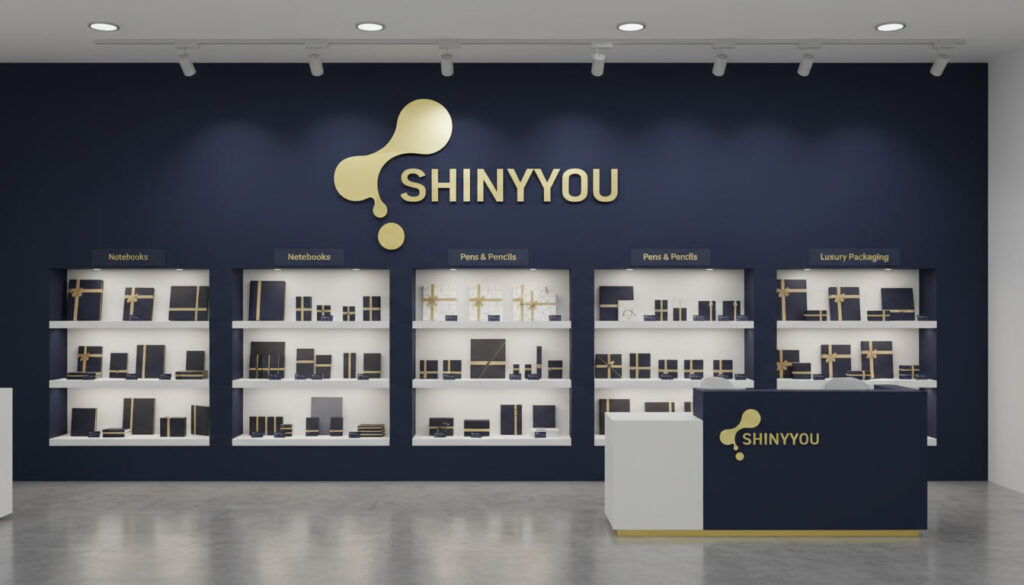
Shiny You’s branded showroom in Ningbo, open for buyer visits year-round
- Direct manufacturer — our factory in Ningbo is open for visits, physical or virtual, at any time
- Full certification portfolio — FSC, BSCI, EUDR, FDA, Walmart FCCA, SCAN, Disney — all current and verified
- Standard MOQ: 3,000 pieces — with production run entry from 5 cases when existing orders are running
- Full OEM capability — notebook design, pen barrel branding, custom packaging from 3,000 pieces
- English-speaking account management — direct communication, no intermediaries
- Quote within 24 hours — send your product list and we respond the same business day
If you’re still working out how to choose a stationery manufacturer for your next order, our team is happy to walk through certifications, MOQ, and lead times on a call before you commit to anything.
Browse our full stationery range or contact our team at shinyyoustationery.com to start the conversation.
Choosing the right stationery manufacturer is a due diligence process, not a quote comparison — and 20 years of getting it right is why buyers in 30+ countries keep coming back when they’re figuring out how to choose a stationery manufacturer for their own catalog.
You might also like:
- Stationery Sourcing from China: Practical Guide 2026
- Custom Notebook Manufacturer China: 2026 Complete Sourcing Guide
- How to Start a Stationery Business: 10-Step Wholesale Sourcing Guide