

Marker Pen Guide 2026: Types, Uses & Buying Tips | Shiny You Stationery
What Is a Marker Pen?
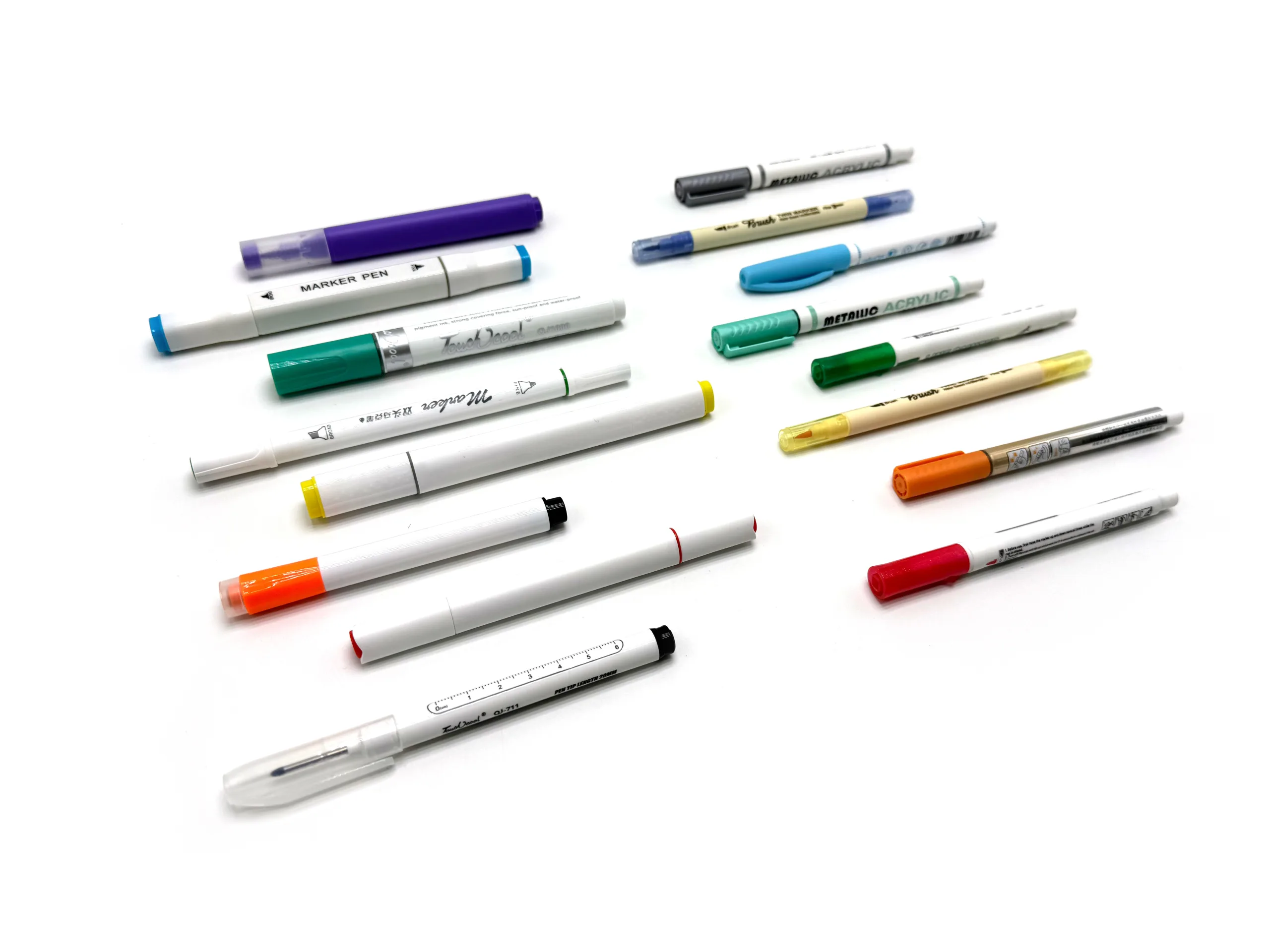
A marker pen—also known as a felt-tip pen, marking pen, flow marker, or sketch pen—is a pen containing its own ink reservoir and a tip constructed of porous materials like felt or compressed synthetic fibers. The tip draws ink through capillary action, allowing smooth, continuous ink flow onto various surfaces.
Anatomy of a Marker Pen
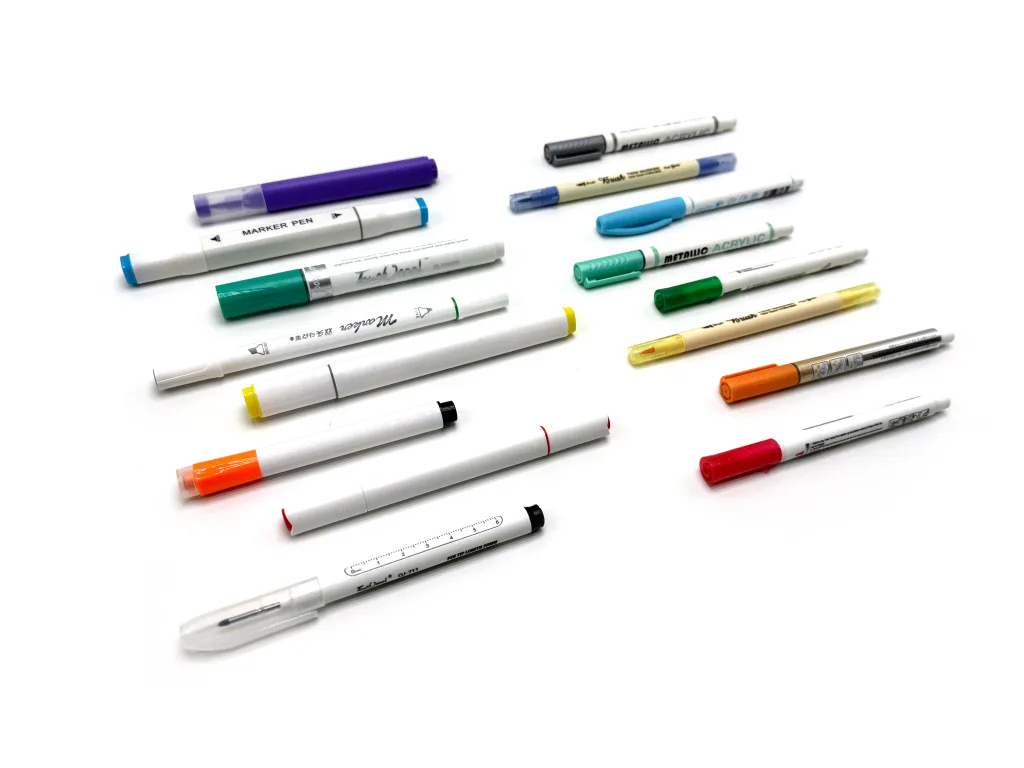
A marker pen is composed of several integral parts:
Ink reservoir (container): Made from materials such as glass, aluminum, or plastic.
Absorbent core: Fibrous material holds and transports the ink.
Tip (nib): Historically made of hard felt, now often synthetic fibers or porous ceramics.
Cap: Prevents ink from drying out between uses.
A Brief History
The development of marker pens unfolds over the 20th century:
1910: Felt-tipped marking pen patented by Lee Newman.
1926: Benjamin Paskach’s “fountain paintbrush” with a sponge tip and paint reservoir.
1953: Sidney Rosenthal introduced the “Magic Marker,” gaining mainstream popularity.
1962: The modern fiber-tipped pen developed by Yukio Horie of Tokyo Stationery Co. (later Pentel).
1970s–1990s: Emergence of highlighters, fine liners, and dry-erase markers; Crayola acquired Magic Marker brand in 1989; new erasable marker types introduced by 1996.
Ink Composition & Safety
Original permanent markers used solvents like toluene and xylene, notorious for their strong odor and toxicity. Today, formulations often rely on less hazardous alcohol-based solvents such as 1-propanol, 1-butanol, and diacetone alcohol.
Permanent marker ink typically comprises:
A carrier solvent,
Glycerides, pyrrolidones, and resins for adherence and water resistance,
Colorants for vivid pigmentation.
Additionally, modern inks may include additives (e.g., ethoxylates, glycol ethers) and preservatives (e.g., phenolic compounds) to enhance durability and storage life.
Types of Marker Pens & Their Uses
Permanent Markers
Write on non-porous materials—metal, glass, plastic, wood, and stone. Their ink resists fading and water but may not adhere permanently to surfaces like Teflon or polypropylene.
Dry-Erase (Whiteboard) Markers
Temporary and easily erasable markers, typically free of toxic solvents, designed for smooth surfaces like whiteboards.
Wet-Erase Markers
Utilize water-soluble inks requiring a damp cloth for removal. Suitable for transparencies and signboards.
Highlighters
Semi-transparent markers used to emphasize text without obscuring it—often in fluorescent shades like yellow.
Security & Election Markers
Include UV-reactive or indelible inks (e.g., silver nitrate) for marking valuables or fingers during voting procedures—marks can last days or weeks.
Art & Specialty Markers
Alcohol-based art markers (e.g., Copic, Prismacolor): vibrant, blendable, fast-drying—widely used in illustration.
Water-based washable markers: non-toxic and odorless—great for children and everyday use.
Chalk markers: chalk-like effect on non-porous surfaces; easy to wipe.
Brush, bullet, and chisel tips: vary stroke style—from broad flourishes to fine details.
Real-World Use Cases
Education & Office: Teachers and professionals use markers for highlighting, labeling, brainstorming, and presentations.
Arts & Design: Artists favor alcohol-based markers for sketches, designs, and blending effects.
Home & DIY: Crafting, organizing, and labeling tasks benefit from marker versatility.
Industrial Applications: Workers mark building materials and surfaces with robust, visible ink.
Medical & Labs: Markers aid in sample labeling or surgical site marking where precision is vital.
Security & Voting: Unique marker types assist in anti-counterfeit or anti-fraud efforts.
Choosing the Right Marker Pen
Key considerations include:
Ink Formulation
Permanent for lasting marks, versatile and resilient.
Water-based for safe, low-odor applications.
Alcohol-based for blending and art quality.
Tip Size & Shape
Bullet: balanced for writing and coloring.
Chisel: dual-width strokes, versatile for text and highlighting.
Fine/Ultra-fine: precise detailing.
Brush: flexible strokes, lettering, creative use.
Surface Compatibility
Match the marker to smooth, porous, or non-porous surfaces for effectiveness.Safety & Odor
Choose water-based markers for sensitive environments; permanent markers may emit stronger fumes.Removability Requirements
Select dry-erase or wet-erase markers for temporary writing.Longevity & Visual Quality
Look for fade-resistant, quick-drying inks with strong color intensity.
Marker Pen Types Comparison Table
| Type of Marker Pen | Ink Base | Tip Style | Best Used For | Advantages | Limitations |
|---|---|---|---|---|---|
| Permanent Marker | Alcohol / Solvent | Bullet, Chisel, Fine | Writing on metal, glass, wood, plastic | Long-lasting, waterproof, fade-resistant | Strong odor, not easily erasable |
| Dry-Erase Marker | Alcohol-based | Bullet, Chisel | Whiteboards, smooth non-porous surfaces | Easy to erase, low residue | Marks can smudge easily |
| Wet-Erase Marker | Water-based | Bullet, Fine | Transparencies, menus, signs | Vibrant colors, resists accidental erasing | Requires damp cloth for cleaning |
| Highlighter | Water-based Fluorescent | Chisel, Bullet | Highlighting printed or written text | Transparent ink, eye-catching colors | Can bleed through thin paper |
| Security Marker | UV-reactive / Indelible | Fine | Marking valuables, anti-theft | Invisible to eye, visible under UV light | Limited everyday use |
| Election Marker | Indelible (Silver Nitrate) | Fine / Brush | Marking fingers during voting | Lasts for days/weeks, prevents fraud | Limited to specialized use |
| Alcohol-Based Art Marker | Alcohol Ink | Brush, Bullet, Chisel | Illustration, professional artwork | Blendable, vibrant, smooth application | Higher cost, can bleed on thin paper |
| Water-Based Washable Marker | Water Ink | Bullet, Fine | Kids’ crafts, everyday writing | Non-toxic, odorless, washable | Less vibrant, not waterproof |
| Chalk Marker | Liquid Chalk | Bullet, Chisel | Glass, chalkboards, signs | Bold, wipeable, dust-free alternative to chalk | Not permanent, can fade outdoors |
Maintenance & Safety Tips
Always cap markers to prevent drying.
Store markers horizontally to maintain balanced ink flow.
Alcohol-based markers sometimes benefit from storage tip-down (to retain ink in the nib).
Clean permanent marker marks with alcohol or acetone-based solvents in a ventilated area; for whiteboards, mild cleaners work best.
Conclusion
The marker pen stands as an essential tool, rooted in both functional history and modern innovation. From its initial felt-tip design to today’s specialized art and industrial variants, it plays a pivotal role across education, art, industry, and beyond. Understanding its ink chemistry, structural design, and diverse types empowers you to select and use marker pens effectively and safely.